AI lead generation agents are changing the game.
Most business owners waste hours prospecting.
Cold emails. LinkedIn outreach. Endless follow-ups.
AI agents do all of it for you.
They find leads. They qualify them. They book calls.
Your pipeline runs on autopilot.
Here is how it works and how to set it up today.
What Are AI Lead Generation Agents?
An AI lead generation agent is software that automates sales prospecting.
It scrapes the web for potential customers.
It researches them. It writes personalised outreach.
It handles follow-ups until the lead is ready to buy.
Think of it as a sales team that never sleeps.
No salaries. No holidays. No training.
The Core Stack For AI Lead Generation Agents
You need four things to build an AI lead gen system:
1. A data source — LinkedIn, Google Maps, or industry directories
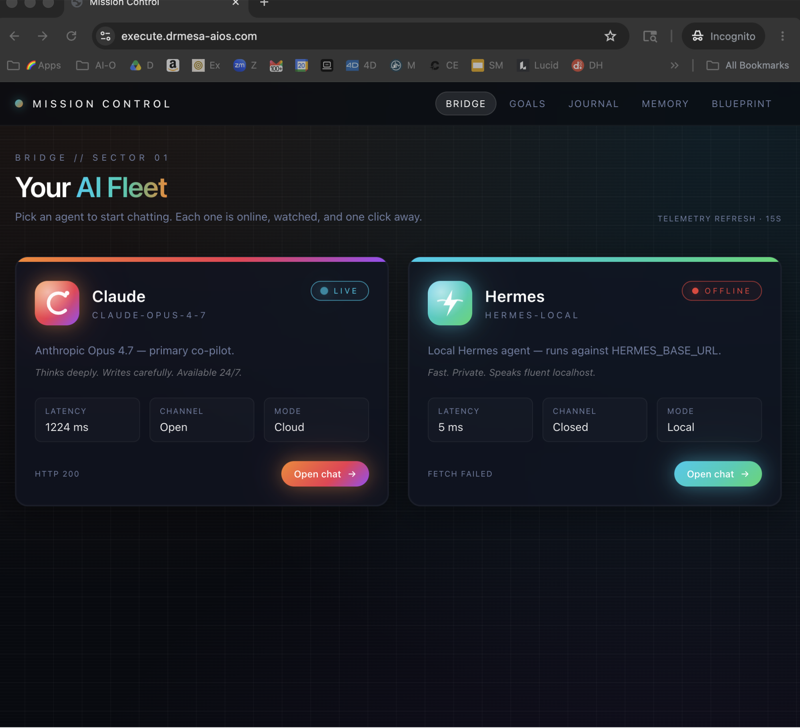
2. An AI agent platform — tools like Hermes, n8n, or Make
3. A CRM or email tool — HubSpot, Lemlist, or SendGrid
4. A web scraping layer — Firecrawl or Apify to pull lead data
Combine these and you have a machine that fills your calendar 24/7.
How AI Lead Generation Agents Work In Practice
Let me walk you through a real example.
I built an AI agent that finds local businesses in my niche.
It scrapes Google Maps for salon owners in London.
It pulls their name, email, phone, and website.
Then it writes a personalised email.
The email mentions their specific salon name and location.
The agent sends it. If no reply in three days, it sends a follow-up.
If they reply, the agent books a call straight into my calendar.
No manual work. Zero copy-paste.
The Best Tools For AI Lead Generation Agents Right Now
Here are the tools I use and recommend:
Hermes Agent — for complex multi-step lead workflows
n8n — the best open-source automation platform
Firecrawl — scrapes any website cleanly
Make (formerly Integromat) — easier than n8n but costs more
Lemlist — warm inboxes and smart follow-ups
HubSpot CRM — free tier handles everything
You can mix and match depending on your budget.
Why This Matters Right Now
Most people still prospect manually.
That is a huge advantage for you.
AI agents are cheap and getting better every week.
The business owner who sets this up today will be miles ahead by Christmas.
Lead generation is the single highest-value use case for AI agents.
It directly brings in revenue.
Common Mistakes to Avoid
Don't use a generic message.
AI can write personalised outreach. Make it do that.
People spot templates immediately.
Don't over-automate the first touch.
A warm intro email works better than a cold sales pitch.
Have your agent research first, write second.
Don't skip the CRM.
Without tracking, you won't know what works.
Every lead, email, and reply should live in your CRM.
Get Started This Week
You do not need a technical background.
Start small. Pick one niche.
Find 50 leads. Let the agent send them.
Track what happens.
Refine your message. Scale up.
I teach this exact system inside the AI Profit Boardroom community.
We share workflows, compare tools, and help each other build.
Join us if you want hands-on support.
The era of manual prospecting is over.
AI lead generation agents are here.
And they are the best investment you will make this year.
Going Deeper: Building a Lead-Generation Agent Stack
An AI lead-generation agent is only as good as the stack around it. A single prompt that spits out a list of names is not lead generation — it is a toy. Real, repeatable lead-gen comes from a small chain of agents that find, qualify, personalise and hand off, with compliance and deliverability built in from the start. This section covers the stack, the order to build it in, and how to measure whether it is actually working.
The Four Layers of a Lead-Gen Agent Stack
- Sourcing — an agent that gathers prospects from places you are allowed to use, staying inside each platform's terms and data rules rather than scraping anything that moves.
- Enrichment and qualification — an agent that adds context (role, company, fit signals) and scores each prospect, so you spend effort only on the ones that match your offer.
- Personalised outreach — an agent that drafts genuinely tailored messages referencing something real about the prospect, not a mail-merge with a first name swapped in.
- Handoff — an agent that pushes qualified, personalised leads into your CRM with the context attached, so a human can pick up a warm conversation.
Each layer feeds the next. Skip qualification and you personalise rubbish; skip the CRM handoff and good leads die in a spreadsheet.
The Order To Build It In
- Start with a tight definition of a good lead. If the agent does not know what "qualified" means for you, nothing downstream works.
- Build qualification before volume. A small stream of well-scored leads beats a flood of noise every time.
- Add personalisation next. This is where AI earns its keep — drafting outreach that sounds researched, at a scale a human cannot match by hand.
- Wire in the CRM handoff last. Once the leads are good and the messages are strong, automate the push so nothing is lost.
Building in this order means every stage improves real output instead of scaling a broken process.
If you want to make money with AI lead generation, check out the AI Profit Boardroom — the agent systems, outreach playbooks and a community running them are all inside the Agent OS. → Get the lead-gen agent stack here
Compliance and Deliverability, Handled Honestly
This is the part that separates a stack that works for years from one that gets your domain blacklisted in a month. Do it right:
- Respect consent and local rules. Outreach law varies by region — know what applies to your market and stay inside it. Automation is not an excuse to ignore it.
- Protect your sending reputation. Warm up domains, keep volumes sane, and make it genuinely easy to opt out. Deliverability collapses when you blast.
- Personalise for relevance, not tricks. A relevant message to the right person is both more effective and more compliant than volume spam.
An AI stack lets you do more outreach; it does not lower the standard for doing it responsibly. If anything, it raises it, because mistakes scale too.
Measuring Cost Per Lead
Judge the stack on economics, not activity. The number that matters is cost per qualified lead — the total cost (model usage, tools, your time) divided by leads that are actually a fit and actually responded. Watch it by stage:
| Stage | What to watch |
|---|---|
| Sourcing | Share of prospects that pass qualification |
| Qualification | How well scores predict real interest |
| Outreach | Reply rate on personalised messages |
| Handoff | Leads a human converts to conversations |
If cost per qualified lead is high, the leak is almost always upstream — weak qualification feeding good outreach effort into bad prospects. Fix the definition of a good lead first.
The Real Takeaway
AI lead-generation agents work when they are a stack, not a single prompt: source responsibly, qualify hard, personalise well, and hand off cleanly — with compliance and deliverability treated as features, not afterthoughts. Build it in that order, measure cost per qualified lead, and you get a system that produces warm conversations at a scale no manual process can match.