The Claude SEO tool I actually use is the SEO agent inside my Agent OS: Claude running a skill-driven pipeline that takes one keyword and a source, then researches, writes, internally links, deploys, indexes and tracks the article. It ships as part of the Agent OS zip inside the AI Profit Boardroom.
📺 Watch: Claude Opus 5.5 Agent OS is SCARY GOOD!
🔥 Get the Agent OS as a free bonus: AI Profit Boardroom members get the full Agent OS zip, prompt libraries, daily tutorials and weekly live coaching calls. → Get inside
That's the whole idea. You don't need another subscription with a login screen, and you don't paste prompts into a chat window and hope. I give Claude one keyword and something real to work from, like a video transcript or my notes. A little later the article is live, it's been submitted for indexing, and there's a new row in my tracking sheet.
Below I'll cover what the SEO agent does step by step, where it sits in the Agent OS dashboard, the results I've published from running this kind of system, and the limits you should know about. Then I'll show you how to get it, or how to build your own if you'd rather DIY.
Why I Use a Claude Tool Instead of Prompts
Most people start doing SEO with Claude the same way. They open a chat, paste a prompt, copy the output, fix it, format it, upload it, and then forget to add internal links. Next week they do it again, slightly differently, because the "rules" only live in their head.
A tool fixes that. Here's how I see the difference between an SEO tool and a chat window:
- The rules live in a file, not your memory. Title length, description length, FAQ count, where the CTAs go. All of it is written into the skill, so Claude reads it every time.
- Every run is identical. The agent follows the same steps in the same order whether it's the first keyword or the five-hundredth.
- Memory means it knows your sites. The agent knows which sites you run and what you've already published, so internal links point at real pages.
- One keyword in, live URLs out. You aren't copying and pasting between five apps. The Claude agent carries the job through to deployment.
That shift is what made SEO with Claude scale for me. The model was never the problem. The missing piece was a repeatable process wrapped around it. If you want to see that same process run live, and join 3,000+ members building with it, the AI Profit Boardroom is where I share the Agent OS and walk through it.
Claude SEO Tool: What the Agent OS SEO Agent Actually Does
The SEO agent inside Agent OS runs on the same skill model as my published Claude Code workflow. If you've read my breakdown of the Claude Code SEO agent, this will look familiar. The difference is that here it lives as a tab in a dashboard, with memory and other agents around it.
Here's the Claude SEO tool pipeline, in order:
- Keyword plus source. You give it one keyword and a transcript or notes. The source is the source of truth, and the article is built on it instead of on generic filler.
- Research grounded in that source. Claude researches the topic, but everything stays anchored to what's in the transcript or notes.
- Slug and frontmatter. The agent creates the slug, a title under 60 characters and a meta description under 155.
- Unique articles per site. If a keyword goes out to more than one site, each site gets its own article, not a copy.
- Internal links. It adds 2-4 internal links in the body plus a Related reading block, pointing at posts that already exist.
- Build and deploy. The site is built and deployed through the Netlify API.
- Indexing. The new URL is submitted to an indexing API.
- Tracking. A row is logged in the tracking sheet so I can see what shipped and when.
On top of the pipeline, the SEO agent runs quality rules before anything goes live:
| Quality rule | What the agent checks |
|---|---|
| Keyword placement | Keyword in the first line and the last line |
| FAQs | 4-6 FAQs per article |
| CTAs | Personalised calls to action, not generic ones |
| Metadata | Title under 60 characters, description under 155 |
| Links | 2-4 internal links plus Related reading |
| Deploy gate | Checks must pass before deploy |
That last row matters most. If the checks don't pass, the article doesn't ship. That's the difference between an SEO tool and a prompt: a prompt can't stop you publishing something broken.
On time, my own estimate is roughly 25 hours of manual work per keyword down to under 30 minutes. That covers researching, writing, formatting, linking, uploading, indexing and logging. Most of the saving comes from the steps after writing, which people forget to count.
If you want me to look at your site and tell you where an agent like this would help most, Book a free SEO strategy session.
📺 Watch: This Claude AI SEO Skill Ranks #1 FAST!
How the SEO Agent Fits Into the Rest of Agent OS
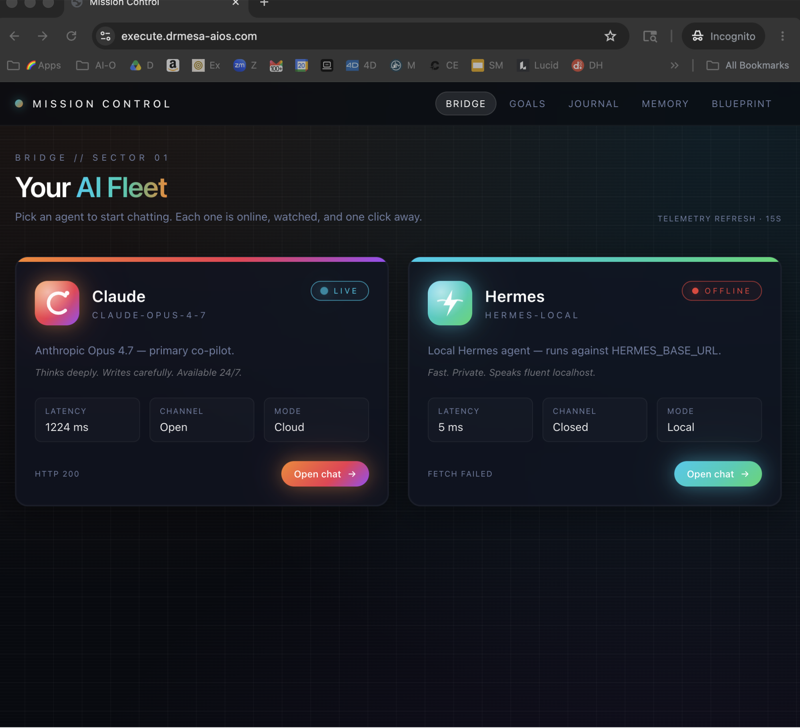
The SEO agent isn't a standalone app. It's one part of Agent OS, which is one dashboard where Claude, Hermes, GPT-6 Astra, OpenClaw and free-model routers run as tabs over shared memory. If you want the full tour, my Agent OS guide covers it, and the Agentic OS v2 write-up explains how the setup evolved.
Three parts of Agent OS make the SEO tool better than it would be on its own:
Shared memory
The memory layer in Agent OS is an Obsidian second brain that the agents update. So when the SEO agent picks internal links, it isn't guessing. It knows which sites I run and which posts are already live. Every article it publishes adds to that memory for the next run.
Other agents in the same dashboard
Agent OS includes custom workflow agents: the SEO agent, the video agent, the outreach tool and a research loop. They sit side by side. A video becomes a transcript, the transcript becomes the source for the SEO agent, and the research loop can feed topics in. Each agent does one job well, and the shared memory connects them.
Model choice
Because Claude, Hermes, GPT-6 Astra, OpenClaw and free-model routers all run as tabs, you aren't locked into one model for every task. If you're curious how I compare models, that's what Goldie Bench is for. For the SEO agent itself, Claude is the engine.
Agent OS ships as a zip with a video walkthrough inside the AI Profit Boardroom, and I update it as the tools change. You don't have to rebuild the SEO agent every time a model or API moves.
📺 Watch: Claude Code AI SEO: How to Rank #1 with Claude Code
Results I've Published From This Claude SEO System
I don't want you taking my word for it, so here are the runs I've shared publicly. These are my own results, from my own videos:
- "0 to 474 Clicks a Day With This AI SEO System"
- "Claude Opus 5.5 AI SEO: 0 to 1,300 Clicks"
- "Claude AI SEO: 0 to 450 Clicks a Day"
Those are my runs on my sites. Your numbers will depend on your niche, your site and, most of all, your authority. That brings me to the honest part.
Honest Limits of Any Claude SEO Tool
The SEO agent writes and ships. It doesn't make Google trust your site. Two limits matter:
Rankings still depend on authority and backlinks
I've seen this in my own data. In my case study on the Hermes SEO page, a DR55 site's traffic tracked its backlink curve almost one for one, while a sister site without links barely moved. Same kind of content, same kind of pipeline, very different results. The tool gets pages live fast, but links still decide how far they climb. If you need a starting point on that side, grab my free link building book.
Garbage source in, garbage page out
The SEO agent treats your transcript or notes as the source of truth. If the source is thin, vague or wrong, the article will be too. The best input is something with real substance: a video where you actually explain the topic, or notes with specifics. The agent is good at structure and shipping. It can't make up expertise you didn't give it.
If you're not sure whether your site needs more content or more authority right now, that's exactly what I cover on a call. Book a free SEO strategy session and we'll look at it together.
How to Get the Agent OS SEO Tool (or Build Your Own)
You have two routes.
Route one: get Agent OS. The SEO agent comes inside the Agent OS zip, with a video walkthrough, as part of the AI Profit Boardroom. Membership is $69 a month, locked in, and normally $110. You get the SEO agent, the video agent, the outreach tool, the research loop and the shared memory layer, plus updates as the tools change, alongside 3,000+ members building with it.
Route two: build your own. If you'd rather DIY, I've written up both approaches:
- Build a Claude skill yourself with my Claude SEO skill walkthrough.
- Build an agent on Hermes with my Hermes SEO agent guide.
Either way, you'll want good prompts while you set it up. My 200+ AI SEO Prompts are a solid base for writing your own skill rules.
FAQ
What is the best Claude SEO tool?
For me, it's the SEO agent inside Agent OS, because it doesn't stop at writing. It takes one keyword and a source, then researches, writes, links, deploys through Netlify, submits for indexing and logs the result. The best tool for you is whichever one runs the same rules every time and gets pages live without manual steps.
Is the Agent OS SEO tool free?
No. The SEO agent ships as part of the Agent OS zip inside AI Profit Boardroom membership, which is $69 a month locked in, normally $110. If you want a free route, you can build your own skill or Hermes-based agent using the guides linked above.
Do I still need backlinks?
Yes. The tool writes and ships content, but rankings still depend on authority. My own data showed a DR55 site's traffic following its backlink curve almost one for one, while a sister site without links barely moved. Content and links work together.
Get the SEO Agent Running on Your Sites
If you want the tool I use every day, with the video walkthrough and the rest of the agents around it, join the AI Profit Boardroom and grab Agent OS. If you'd rather talk through your own site first, Book a free SEO strategy session. Either way, one keyword in and live URLs out is how I'd want you running your Claude SEO tool.