A hermes agent web ui is a browser-based dashboard that drives Hermes from a single screen — chat, voice, agent teams, task boards and shared memory — instead of leaving everything buried in a terminal window. Julian Goldie runs his whole operation through one, and his take is blunt: the terminal is fine, but a dashboard is way better. This guide covers what a Hermes web UI actually is, the six panels a good one contains, and the two ways to get one running.
📺 Watch: Hermes Agent OS Just Changed AI Agents Forever!
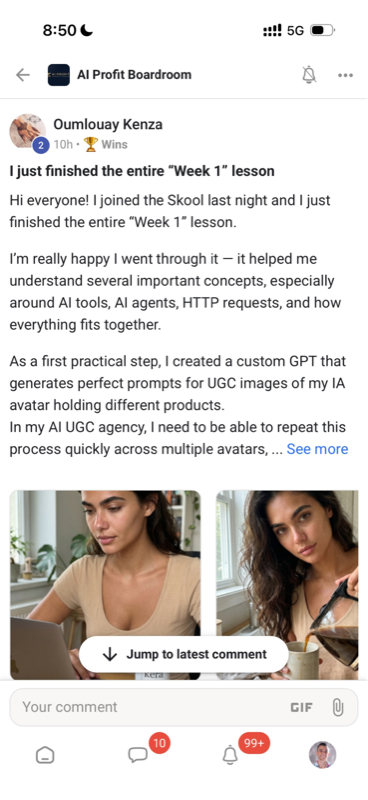
🔥 Get the Agent OS as a free bonus: AI Profit Boardroom members get the full Agent OS zip, prompt libraries, daily tutorials and weekly live coaching calls. → Get inside
What Is a Hermes Agent Web UI?
Hermes normally lives in the command line. You open a terminal, type a prompt, and watch text scroll past. That works, but it keeps a very capable agent locked inside a window that forgets everything the moment you close it.
A Hermes agent web UI moves the whole workflow into your browser. It is a dashboard running on localhost — your own machine, not somebody else's cloud — that sits on top of Hermes and gives every part of the job a proper home: a chat panel, a voice mode, a task board, workspaces for finished builds, and a visual memory layer.
Nothing about the underlying agent changes. Hermes still does the work. The web UI changes how you direct that work — and, more importantly, what survives between sessions.
Why the Terminal Alone Holds You Back
Working terminal-only, three taxes quietly drain your week:
- You re-explain context constantly. Every fresh session starts blank, so each job begins with you repeating who you are, what the project is and how you like things done.
- Jobs need you present. Work only moves while the window is open and you are watching it. Step away and progress stops.
- Work scatters across tabs. One build lives in this window, another in that one, and a week later you cannot find either.
With a proper dashboard the picture flips. Jobs keep running whether or not you are watching. Every build lands in a saved workspace. And every agent starts with your context already loaded, because memory is shared rather than trapped in one chat.
There is a compounding bonus: new models become a dropdown change. Because the UI holds your profiles, context and memory, a new model simply inherits everything. When a brand-new model launched, Julian Goldie had it plugged into his dashboard in roughly two minutes — then ran it through Goldie Bench, his own hands-on testing gauntlet, to see how it performed. No migration, no re-setup, no lost memory.
📺 Watch: Hermes: Agent OS + Obsidian + FREE Apis + WebUI!
What a Good Hermes Agent Web UI Contains
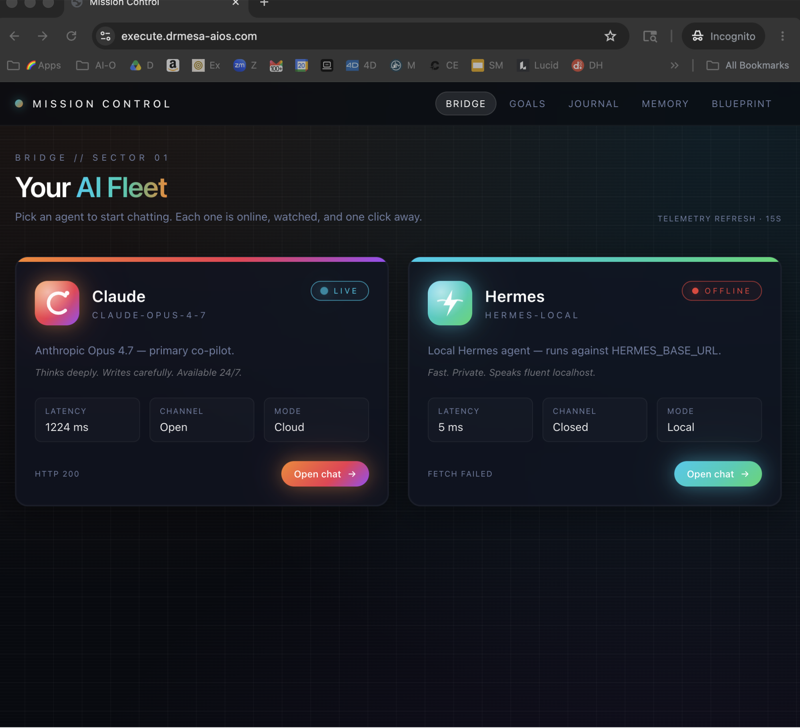
The clearest reference point is Agent OS, the mission-control dashboard Julian Goldie built for his own business and now ships to his community. Six panels do the heavy lifting:
| Panel | What it does |
|---|---|
| Chat | Talk to Hermes with per-job profiles, so the writing agent, the coding agent and the research agent each open with the right context. |
| Voice — Hermes Apollo | Speaks and listens in real time, and can control the browser and the computer. Say "open up Obsidian" and it does. |
| Agent teams — Paperclip | A whole team of agents working together on one job, instead of a single agent grinding through it alone. |
| Kanban board | Assign a task to the board and agents triage it and complete it while you get on with something else. |
| Workspace | A per-agent home where every build lands — nothing lost, everything easy to come back to. |
| Memory galaxy | The Obsidian vault visualised in 3D, so you and your agents share one brain. |
The panels people underestimate
Three of the six deserve a closer look.
Voice. Hermes Apollo is not a dictation gimmick. It speaks and listens in real time and can drive the machine itself — opening apps, steering the browser — turning the dashboard into something you talk to rather than a screen you type into.
The kanban board. This is where delegation becomes real. Drop a task on the board and the agents pick it up, triage it and finish it whether or not you are in the room.
The memory galaxy. Because the whole system reads from one Obsidian vault, rendered in 3D, agents stop asking questions you have already answered. Your notes, decisions and past builds become the shared starting point for every new job.
📺 Watch: NEW Hermes Agent Web UI is WILD!
The Two Ways to Get a Hermes Agent Web UI
There is no secret third option here. You either build the dashboard or you install one that already exists — and Julian Goldie has done both, in that order.
Option 1: Build it yourself — by asking your agent
This is more literal than it sounds. You do not learn a framework or hire a developer. You open Claude — or Hermes itself — and ask it to build you a dashboard: a local web page with a chat panel wired to your agent.
That is exactly how Julian started. The first version was rough, and every week he asked his agents to improve it — a board here, a workspace there — until it grew into the mission control above. The build route costs nothing but time, and it teaches you how the system fits together.
The trade-off is equally honest: you are now maintaining software. Every panel Agent OS already ships with is a panel you would be re-inventing — voice, teams, memory and all.
Option 2: Install the ready-made Agent OS
The second route skips the build entirely. Agent OS ships as a zip file with a video tutorial, inside the AI Profit Boardroom, and it is updated regularly — so the panels keep improving without you touching anything.
Installation is the part people expect to be painful, and it is not: your agent installs it for you — point Hermes or Claude at the zip and it handles the setup. Non-technical members run this every day; the community's testimonial document now runs to 204 pages.
How to choose:
- Build if you want to understand every moving part and enjoy shaping your own tools.
- Install if you want the finished dashboard today and would rather spend your time using it than maintaining it.
- Do both: install the ready-made system, then ask your agents to extend it. The zip is a starting point, not a ceiling.
If you want a Hermes agent web UI making you money, check out the AI Profit Boardroom — the complete Agent OS dashboard is inside as a zip with a step-by-step video tutorial, updated regularly. → Get the dashboard your agent can install for you
📺 Watch: NEW Hermes Agent Web UI is INSANE 🤯 (FREE!)
Running It Day to Day: Phone Access and Costs
Phone access. Because the dashboard runs on localhost, it is private by default — but that does not mean it is chained to your desk. Through Tailscale, a private encrypted tailnet, you can use it from your phone: the setup takes around ten minutes, costs nothing, and nothing gets exposed to the public internet. Assign a task from the sofa; check the board from anywhere.
Running costs. The dashboard itself adds nothing to your bill. You bring the CLI subscriptions you already pay for, or run free models through OmniRoute or a local engine — so the whole system can sit at or near zero extra cost.
Frequently Asked Questions
Do I need to be technical to run a Hermes web UI?
No. The install route was designed for non-technical people: your agent does the installation, and a video tutorial walks you through the rest. Julian Goldie's community is full of members with no coding background running it daily.
Does the dashboard replace the terminal?
No, and it does not need to. Hermes still runs underneath, and the terminal is still there whenever you want it. The dashboard is a layer on top that adds persistence, delegation and shared memory.
Can I use my existing AI subscriptions with it?
Yes. The web UI drives the tools you already have, so existing CLI subscriptions plug straight in. If not, free models through OmniRoute or a local engine keep the cost near zero.
How long does it take to add a new model?
In Julian Goldie's case, roughly two minutes for a brand-new release: change the dropdown and the model inherits your profiles, memory and workspaces. He then scores newcomers through Goldie Bench, his own hands-on testing, before trusting them with real client work.
Is my data safe in a browser dashboard?
The dashboard runs on localhost, so everything stays on your machine. If you add phone access, Tailscale keeps the connection inside a private encrypted tailnet, not the open internet.
The Bottom Line
A hermes agent web ui is not decoration on top of a terminal — it is the difference between prompting an agent and running an operation. The six panels that matter are chat with per-job profiles, real-time voice through Hermes Apollo, agent teams through Paperclip, a kanban board that works while you do not, a workspace that saves every build, and a memory galaxy that gives you and your agents one shared brain.
And there are exactly two ways in. Ask your agent to build you a dashboard and improve it week by week, the way Julian Goldie did — or install his finished Agent OS from the zip and let your agent handle the setup. Either way, the day you stop re-explaining yourself to a blank terminal is the day this stops being a tool and starts being a system.