Learning how to use Ruflo is how you go from asking Claude one slow question at a time to commanding a whole team of AI agents at once. Ruflo is an add-on that plugs into Claude and turns it into an agent swarm — one mission in, a team of specialists working in parallel, one assembled answer out. This guide walks through exactly how to use it, the framework behind it, and what to point it at first.
📺 Watch: New FREE Hermes Computer Use Agents!
🔥 Get the Agent OS as a free bonus: AI Profit Boardroom members get the full Agent OS zip, prompt libraries, daily tutorials and weekly live coaching calls. → Get inside
What Is Ruflo?
Ruflo is an agent-orchestration layer for Claude. On its own, Claude is a brilliant assistant that works one step at a time: you ask, it answers, you ask again. Ruflo changes the shape of that. You give it a single mission, and instead of one assistant doing everything slowly, it spins up a swarm of sub-agents — a planner, a builder, a checker and more — that work at the same time and share what they find as they go. In practice you can launch a large team of agents from one prompt, and watch them spread across a live map while they work.
Think of it as the difference between having a hundred employees and only letting one show up to work. Ruflo lets the whole team show up.
How To Use Ruflo, Step by Step
- Attach Ruflo to Claude. Ruflo runs as an add-on on top of Claude, so once it is connected, Claude becomes the swarm engine rather than a single chat.
- Write one clear mission. Type what you want in a single sentence — no coding, no choosing which agents do what. A good mission is specific: "build a full launch plan for this product," not "help with marketing."
- Launch the swarm. Hit launch and Ruflo assembles the team a job needs and sends them off together.
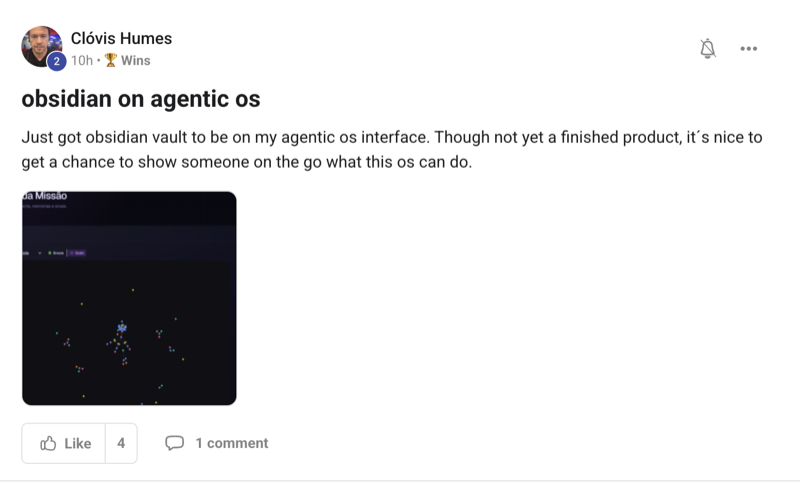
- Watch the constellation. The agents appear on a live map as they work — you can see each specialist running and sharing findings, instead of staring at one slow reply.
- Collect the assembled answer. As the agents finish, their work assembles itself into one clean result in front of you.
- Save and replay. Keep the run so you can replay the same mission later with new inputs, rather than starting from scratch each time.
That is the core loop. The more clearly you write the mission, the better the swarm performs — so spend your effort there.
The Goldie Ruflo Constellation: The 5 Layers
To use Ruflo well, it helps to understand the framework behind it — five simple layers:
- 1. The mission. Ruflo is a dedicated home for running a team of agents on one job. It is a platform, not a chat — you bring the goal, it brings the team.
- 2. Launch the swarm. One sentence, one launch. No setup, no picking agents — they just go.
- 3. The constellation. A team of specialist agents runs in parallel, each with a role, sharing findings as they work. This is the part you watch live.
- 4. The assembled answer. The result builds itself as the agents go, so you end with one clean output rather than a pile of fragments.
- 5. The loop. On its own Ruflo is an engine, but inside an operating system it becomes a team you can see, save and replay — with a shared memory that feeds every agent your context.
That last layer is the difference-maker, and it is the one thing most people miss when they set this up: without a shared memory and a place to save runs, you lose the compounding value. With them, every mission makes the next one better.
📺 Watch: How to Use Claude Code FREE with N2!
What To Use Ruflo For
Ruflo shines on big, multi-step jobs where a single agent would be slow. Strong use cases include:
- Launch plans — "build a full launch plan for this new project."
- Competitor research — "research the top 10 competitors in my niche and tell me where the gaps are between me and them."
- Content and email — "draft a 30-day content plan and a matching email sequence."
- Deep, multi-part strategy where several angles need working at once.
The rule of thumb: the bigger the job, the more Ruflo helps, because it has a whole team working together. For a quick, one-line question, you do not need a swarm — just use Claude directly.
If you want to make money running AI agent swarms, check out the AI Profit Boardroom — you get the done-for-you Ruflo setup inside the Agent OS, with every prompt, the live node graph, shared memory, a 30-day plan and weekly coaching. → Get the Ruflo swarm setup here
📺 Watch: How to Use Hermes + NotebookLM for FREE!
Getting the Most Out of Ruflo
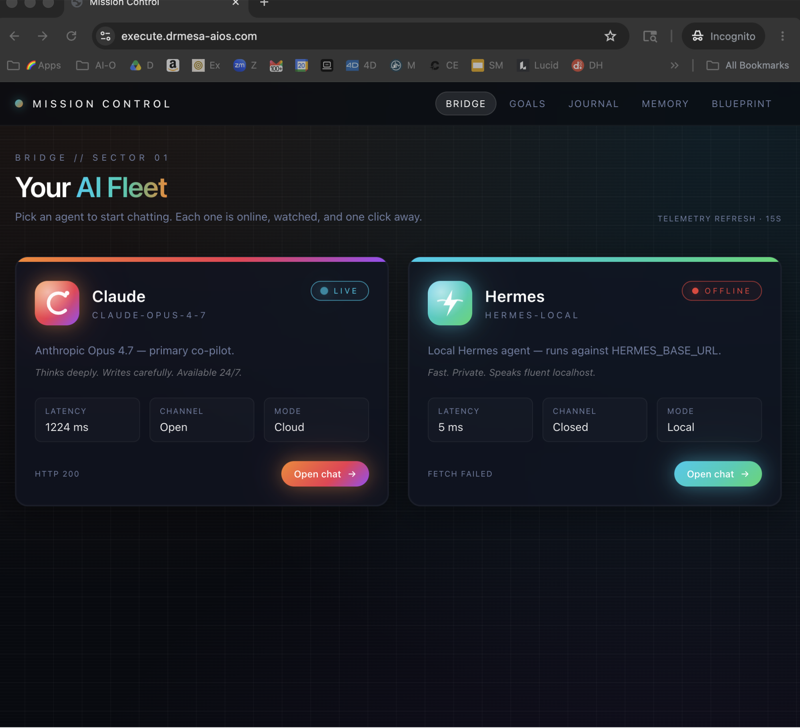
Two things separate people who get real results from Ruflo and people who play with it once. First, shared memory: wiring Ruflo into a memory layer built on Obsidian means every agent reads your business context, so the output sounds like you rather than generic AI. Second, a control center: running the swarm inside an Agent OS with a dashboard lets you launch, watch, save and replay missions in one place, which is far easier to manage than a bare terminal. You can run Ruflo directly in a Claude Code terminal, but it will not look as good or be as easy to steer.
It is also worth knowing that Anthropic recently released a similar swarm-style capability, sometimes referred to as Ultra Code, as an alternative approach — the ideas are converging, which is a good sign that agent swarms are here to stay.
Frequently Asked Questions
Do I need to code to use Ruflo?
No. You type your mission in one plain sentence and launch. You do not pick agents or write code — Ruflo handles the orchestration.
How many agents can Ruflo run?
It is built to run a large swarm in parallel — many specialists on one job at the same time, rather than one agent working step by step.
Is Ruflo better than using Claude normally?
For big, multi-step jobs, yes — a swarm is faster and more thorough. For quick questions, plain Claude is fine. Use the swarm where the job is large.
How do I keep the output sounding like me?
Wire Ruflo into a shared memory layer (Obsidian works well) so every agent reads your context. That is what stops the output feeling generic.
The Bottom Line
Knowing how to use Ruflo comes down to a simple loop: attach it to Claude, write one clear mission, launch the swarm, watch the constellation, and save the run. Point it at big jobs, give every agent shared memory, and run it inside an Agent OS so you can see and replay your work. Do that, and you stop doing AI one slow step at a time — and start commanding a whole team.