A hyper agent is more than a single chatbot. It is a high-powered AI system that plans a goal, breaks it into steps, spins up its own helper agents, uses real tools, remembers what it learns, and keeps working until the mission is finished. Where a basic assistant answers one prompt at a time, a hyper agent runs the whole project from start to end.
📺 Watch: Hermes Agent: HyperFrames AI SEO is INSANE (FREE!)
🔥 Get the Agent OS as a free bonus: AI Profit Boardroom members get the full Agent OS zip, prompt libraries, daily tutorials and weekly live coaching calls. → Get inside
This guide explains what a hyper agent actually is, how it differs from an ordinary AI assistant, what you can build with one, and where the honest limits still sit. We will use Hermes, the agent inside Julian Goldie's Agent OS, as a concrete, real-world example.
What is a hyper agent?
Think of the difference between a single worker and a project manager who has a team. A normal AI assistant is the single worker: you give it one task, it gives you one answer. A hyper agent behaves more like the manager. It reads the goal, makes a plan, delegates parts of the work, checks the results, and adjusts course.
The word "hyper" points to scale and autonomy. A hyper agent is designed to handle long, multi-step missions with less hand-holding. It does not stop after one reply. It loops: plan, act, observe, correct, repeat — until the outcome matches the goal.
You may also see "hyper agent" used as a product name by various tools. In this guide we focus on the concept — the category of highly autonomous, orchestrating agents — rather than any single branded product.
What separates a hyper agent from a basic assistant
Four capabilities turn an ordinary assistant into a hyper agent: autonomy, orchestration, memory, and tool use. Here is the quick contrast.
| Capability | Basic AI assistant | Hyper agent |
|---|---|---|
| Autonomy | Answers one prompt, then waits | Pursues a goal across many steps |
| Orchestration | Works alone | Launches and coordinates sub-agents |
| Memory | Forgets between chats | Keeps shared, ongoing memory |
| Tool use | Mostly text replies | Calls tools, APIs, and files to act |
| Best for | Quick questions | Multi-step missions |
Autonomy
A basic assistant waits for your next instruction. A hyper agent is given a goal and the freedom to reach it, deciding the next step on its own and only pausing when it needs a human decision or approval.
Orchestration
Rather than doing everything itself, a hyper agent can launch sub-agents — smaller specialised agents that each own one part of the job. One might research, another writes, another checks quality. The hyper agent coordinates the swarm and pulls the results together.
Memory
Ordinary chat forgets once the window fills up. A hyper agent keeps a working memory across steps and sessions, so it remembers earlier decisions, your preferences, and what has already been tried. Shared memory also lets its sub-agents stay on the same page.
Tool use
A hyper agent can act on the world, not just talk about it. It calls tools and APIs: searching the web, reading and writing files, running code, sending drafts, updating a dashboard. Tools are what let it finish real tasks instead of only describing them.
What you can do with a hyper agent
Because a hyper agent runs multi-step missions, it suits work that used to need a small team or a long afternoon. Common uses include:
- Research projects: gather sources, compare them, and produce a structured brief.
- Content pipelines: plan, draft, edit, and format a batch of articles or emails.
- Operations: monitor a dashboard, flag issues, and prepare the fix for approval.
- Data work: pull numbers from several places, clean them, and summarise the trend.
- Personal admin: triage a backlog, draft replies, and queue them for your sign-off.
The pattern is the same each time: you set the mission, the hyper agent handles the busywork, and you stay in control of the decisions that matter.
📺 Watch: Hermes Agent + HyperFrames: FREE Ai Video Agent!
Hermes — a hyper agent inside the Agent OS
Julian Goldie's Agent OS is a working example of where a hyper agent lives. Inside it runs Hermes, the AI agent that acts as the hyper agent for the whole system.
Hermes fits the definition closely:
- It orchestrates agent swarms — delegating parts of a mission to sub-agents that work in parallel.
- It uses shared memory, so the agents and sessions keep context instead of starting from scratch.
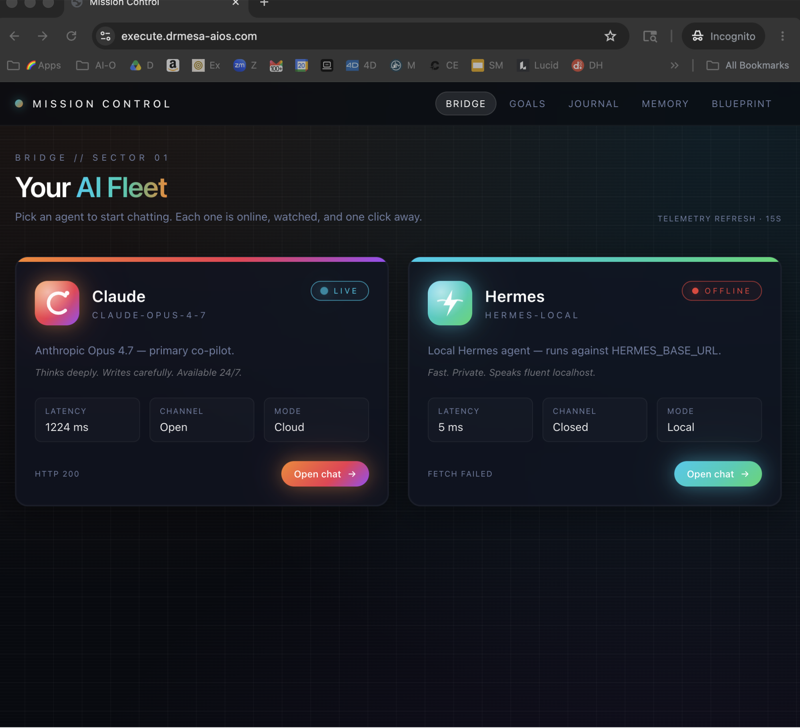
- It reports to a mission-control dashboard, giving you a single place to watch what the agents are doing.
- It runs inside the Agent OS, which gives Hermes the workspace, tools, and structure to complete real tasks.
That combination — orchestration, shared memory, a control dashboard, and a home to run in — is what makes Hermes a real-world hyper agent rather than just another chat window.
📺 Watch: Hermes Agent: HyperFrames AI SEO is Insane (FREE!)
How to build or run a hyper agent
You do not need to write one from scratch. The practical path looks like this:
- Pick a clear mission. Hyper agents shine on defined, repeatable goals, so start with one job you understand well.
- Give it tools. Connect the search, files, and APIs it needs to act, not just answer.
- Set up memory. Decide what it should remember across steps and sessions.
- Allow orchestration. Let it split big jobs into sub-agents where that helps.
- Keep a human checkpoint. Approve the actions that send, publish, spend, or delete.
Model choice matters too. In Julian Goldie's own hands-on testing — which he calls Goldie Bench — different models handle planning, tool use, and long missions with different reliability. That is his testing experience rather than an objective ranking, but it is a useful reminder to test a model on your real task before you trust it with the whole mission.
The honest limits
A hyper agent is powerful, not magic. Keep these limits in mind:
- It can still make mistakes and state them confidently, so review the important outputs.
- More autonomy means more risk if a tool is misused, which is why approval steps matter.
- Long missions can drift from the goal without clear instructions and checkpoints.
- Costs and time add up when many sub-agents run, so scope the mission sensibly.
- It is only as good as the tools, data, and memory you give it.
Used well, though, a hyper agent takes the repetitive, multi-step work off your plate and leaves you the decisions.
If you want to build a hyper agent that makes you money, check out the AI Profit Boardroom — the Agent OS and Hermes are built in. → Start building your hyper agent
Hyper agent FAQ
Is a hyper agent the same as an AI agent?
Not quite. Every hyper agent is an AI agent, but not every AI agent is a hyper agent. The "hyper" part signals stronger autonomy, orchestration of sub-agents, memory, and tool use across long missions.
Do I need to code to use one?
No. Systems like the Agent OS package the hard parts, so you can set a mission and approve actions without building the plumbing yourself.
Is a hyper agent safe to run on its own?
It is safe when you keep human checkpoints on actions that send, publish, spend, or delete. Give it freedom to plan and research, but approve the irreversible steps.
What makes the best hyper agent?
A capable model, good tools, reliable memory, and clean orchestration. Julian Goldie tests models for this in Goldie Bench; treat that as his experience and confirm on your own task.
The Bottom Line
A hyper agent is the step beyond a single chatbot: an autonomous system that plans, orchestrates sub-agents, remembers, and uses tools to finish real missions. Hermes inside the Agent OS shows what that looks like in practice — agent swarms, shared memory, and a mission-control dashboard in one place. Start with a clear job, give it the right tools, keep a human in the loop, and let it carry the repetitive work while you focus on the decisions.