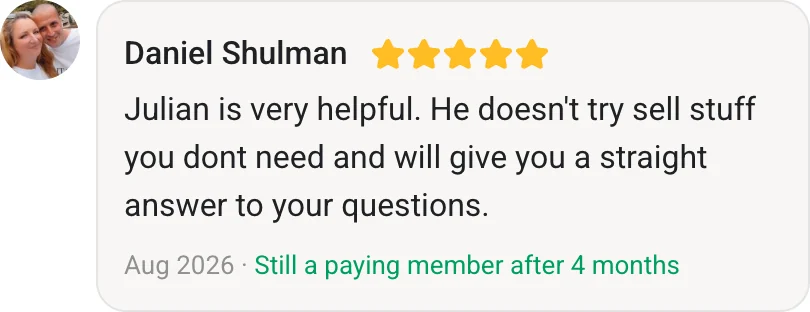
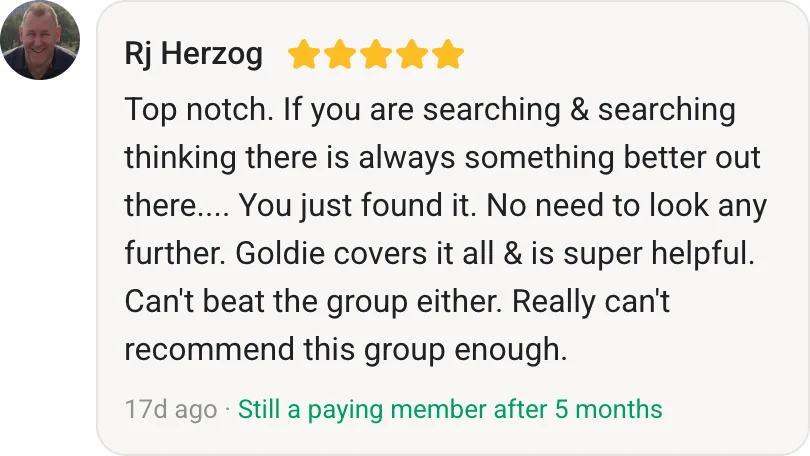
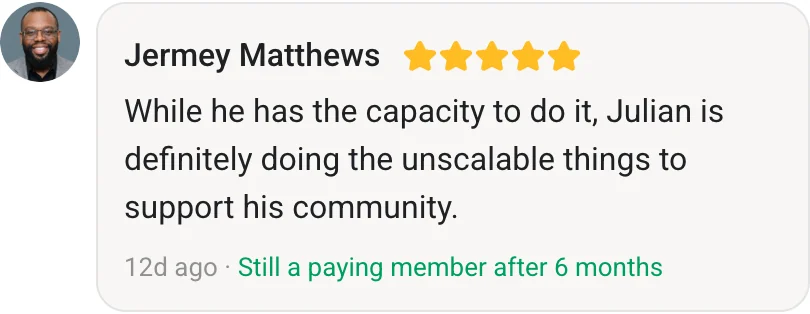
AI SEO for dentists is the work of making your practice the clear, trusted answer when Google, its AI Overviews, ChatGPT or Perplexity are asked about dentists, treatments or emergency appointments near a patient. Goldie Agency is the done-for-you option for practices that want it handled. Julian Goldie, who runs the agency, has 10+ years in SEO, and Goldie Agency's Upwork profile shows a 100% Job Success Score, 240+ clients and 200+ five-star reviews. To see where your practice stands, claim your free SEO strategy session.
Book a free SEO strategy session →
📺 Watch: How to Rank #1 FREE with Local AI SEO
🔥 Get the Agent OS as a free bonus: AI Profit Boardroom members get the full Agent OS zip, prompt libraries, daily tutorials and weekly live coaching calls. → Get inside
For a dental practice, AI search is local search first. Patients ask "dentist near me open Saturday" or "who does Invisalign in my town", and the answer they get leans on the same signals that drive Google Maps. This guide goes local first, then pages, then the AI layer on top. If you or your marketing lead want to learn the AI tools behind this, the AI Profit Boardroom is where we teach AI SEO and share our systems.
Start with the Google Business Profile
Google's AI features guide lists "Checking that your Merchant Center and Business Profile information is up-to-date" as one of the SEO fundamentals that still matter for AI Overviews and AI Mode. For a practice, the profile is the base layer.
Google's guidelines for representing your business have a section dentists should read closely, because Google treats dentists as individual practitioners:
- Practice and dentist profiles can both exist. If several public-facing dentists work at one location, Google says the practice should have its own profile, separate from each dentist's profile.
- Dentist profiles carry the dentist's name only. Google says a practitioner's profile title should include only the practitioner's name, not the practice name. Titles like Dr. are allowed.
- Solo dentists in a branded group share one profile. Google's format is the brand, a colon, then the practitioner's name.
- No profile per specialty. Google says a practitioner shouldn't have multiple profiles to cover each specialization.
- Support staff don't get profiles. Only public-facing practitioners do.
The general rules apply too: use the practice's real-world name with no keywords stuffed in, a precise address, the fewest categories that fit, and a local phone number under your control. Google's local ranking help says complete, accurate profiles are more likely to show, and that results are based mainly on relevance, distance and prominence. It also says there's no way to pay for a better local ranking.
Book a free SEO strategy session →
Reviews: volume, replies and privacy
Google says prominence draws on how many reviews a business has and how many websites link to it, and that more reviews and positive ratings can help local ranking. It also recommends replying to reviews.
Dental reviews need one extra rule. Google's guidelines don't allow content that contains private or confidential information such as sensitive records. So keep replies general. Thank the reviewer, invite them to call the practice, and never confirm someone is a patient or mention their treatment in a public reply. Agree a reply template with your compliance lead so front-desk staff can answer quickly without risk.
Ask at checkout or by text after the visit, with one short link. Never pay for reviews.
Want a second opinion on your profiles and reviews? Claim your free SEO strategy session and we will go through them with you.
📺 Watch: Local SEO: How I Rank DR 0 Sites #1 in 30 Days
One page per treatment
A single "Our Services" page listing twenty treatments gives AI tools very little to work with. Google's AI features guide says important content should be "available in textual form". Each main treatment deserves its own page: check-ups and hygiene, fillings, crowns, implants, clear aligners, whitening, emergency care, children's dentistry, and whatever else you offer.
Each treatment page should cover, in plain words:
- What the treatment is and who it is usually for.
- What happens at the appointment, step by step.
- How to book, and whether you see new patients.
- Which dentist at the practice does it, with a short bio.
- Links to related treatments and to the booking page.
Dental content sits in what Google calls "Your Money or Your Life" topics. Google's helpful content guidance says its systems give even more weight to strong experience, expertise, authority and trust on topics that can affect health. In practice that means a real dentist's name on each page, accurate credentials, and no fabricated author profiles, which Google calls a form of deception.
Book a free SEO strategy session →
Health claims: be careful
Keep every treatment page factual. Describe what a procedure involves. Don't promise outcomes, don't claim a treatment is painless or permanent, and don't compare yourself with other practices in ways you can't support. Before any page goes live, check your dental board's (or the GDC's) advertising rules with your own compliance lead. We write the SEO side; your compliance lead signs off the claims.
📺 Watch: How To Do Local SEO Keyword Research
Add an FAQ that matches real patient questions
Your reception team already knows the questions. Write them down for a week, then answer the common ones on the right treatment page or a general FAQ page. Good candidates are questions about new patient appointments, opening hours, parking and access, emergency appointments, and what to bring to a first visit.
Google's AI Overviews and AI Mode may use "query fan-out", which Google describes as issuing multiple related searches across subtopics. A patient asking about implants may trigger related searches about the appointment, recovery time and local providers. Pages that answer those side questions clearly give Google more to work with. If your practice also uses structured data, Google says it must match the visible text on the page.
Not sure which pages to build first? Book a free SEO strategy session and we will show you.
How AI SEO for dentists handles "dentist near me" questions
| Patient asks | Where the answer should live | What to check |
|---|---|---|
| Dentist near me open now | Business Profile hours and address | Hours, holiday hours and pin location are correct |
| Emergency dentist in my town | Emergency care page plus profile | Page says how to get a same-day slot and who to call |
| Who does implants near me | Implants treatment page | Named dentist, clear steps, booking link, area named |
| Does this practice take new patients | Homepage and new patient page | Answer stated in plain text, not only in an image |
| Kid-friendly dentist nearby | Children's dentistry page | Age range, what to expect, parking and access |
Book a free SEO strategy session →
Then check the AI tools can reach the site. OpenAI says sites that opt out of OAI-SearchBot "will not be shown in ChatGPT search answers", though they can still appear as navigational links. Perplexity says PerplexityBot surfaces and links sites in its results and recommends allowing it in robots.txt. Google says crawling must be allowed in robots.txt and by any CDN or hosting setup. Ask your web vendor to confirm all three are allowed.
Each month, ask the AI tools your patients' questions and note which practices and pages they cite. For a deeper look at how AI tools see a brand, see our guides to an AI visibility audit and brand visibility in AI search. For the Google side, read how to rank in Google AI Overviews, and for ChatGPT, how to rank in ChatGPT. A free SEO and GEO audit is a quick first check.
What Goldie Agency does for practices
Goldie Agency handles the work that takes practice teams the longest: site audits, treatment page structure, crawler and technical fixes, and earning links and mentions by manual outreach with no PBNs, as listed on goldie.agency. We run much of the repeat checking with the free Agent OS we use to automate SEO tasks, and we choose AI models based on Goldie Bench, where we test AI models.
Julian is the author of the Amazon best-seller "Link Building Mastery" and has 428K+ subscribers on @JulianGoldieSEO. On his own site, aiprofitboardroom.com, his Search Console data shows clicks rising from 328 a month in October 2025 to 22,443 a month in October 2026. That is his site, not a dental client. Nobody can guarantee a ranking or an AI mention, and Google itself says to walk away from any SEO who guarantees first place.
The verdict: fix the profiles, build one page per treatment, keep reviews steady, and let the crawlers in. Claim your free SEO strategy session and we will build the plan around your practice.
Book a free SEO strategy session →
FAQ
Should each dentist at our practice have a Google Business Profile?
Google allows public-facing practitioners, including dentists, to have their own profiles, separate from the practice's profile. Support staff shouldn't have one, and no dentist should have several profiles for different specialties.
Can we reply to reviews that mention a patient's treatment?
Reply, but keep it general. Google's guidelines don't allow private or confidential information in profile content. Thank the reviewer and invite them to contact the practice directly.
Do we need special code for AI Overviews?
No. Google says there are no additional requirements or special schema needed for AI Overviews or AI Mode. The page must be indexed and eligible to show with a snippet.
How fast do changes show up in ChatGPT?
OpenAI says robots.txt changes take about 24 hours to register for search. Whether a practice is named in an answer still comes down to what the tool finds and trusts.
Free resources
Get our free 200+ AI SEO prompts, including prompts for treatment pages and FAQs. For earning links to your practice, grab Julian's free book Link Building Mastery.
Want the systems behind this? Join the AI Profit Boardroom to learn AI SEO step by step.
Ready to hand it off? Book a free SEO strategy session, or claim your free SEO strategy session and get an AI SEO for dentists plan built for your practice. You can also book a free call at a time that suits you.