A gauntlet loop is a multi-agent AI pattern where a lead agent splits your goal into pieces, sub-agents build each piece, and a wall of blind critics judges every piece against a real-world benchmark — looping until the work survives every judge, so the AI checks the work instead of you. That last clause is the whole point. The builder never grades itself, and the loop only ends when the output stands next to something genuinely good.
📺 Watch: Claude's Gauntlet Loop Changed AI Forever
🔥 Get the Agent OS as a free bonus: AI Profit Boardroom members get the full Agent OS zip, prompt libraries, daily tutorials and weekly live coaching calls. → Get inside
The pattern comes from Matt Shumer, who published the prompt publicly and free. One three-sentence prompt built an entire 3D game. Since then people have pointed the same gauntlet at racing games, 3D property walkthroughs, landing pages and social designs. I broke the whole system down in my video "Claude's Gauntlet Loop Changed AI Forever", and everything below comes from that breakdown.
What Is A Gauntlet Loop?
Start with the old way, because you are probably still living it. You prompt, the AI builds, you review, you send corrections, it rebuilds. Twenty to fifty review round-trips is normal on a serious asset. You are the quality checker, which means the AI only works as fast as you can review. That is not automation.
The basic loop — one builder agent plus one critic agent — has existed for years. Anthropic wrote in its 2024 guidance on building effective agents that a separate evaluator model beats letting a model check its own work. Boris Cherny, who built Claude Code at Anthropic, put it more bluntly:
"I don't prompt anymore. My job is to write loops."
A gauntlet loop is the industrial version of that idea. Instead of one critic giving notes, the work has to survive a gauntlet: many builders, many critics, one hard benchmark, no mercy.
The 3 Upgrades That Turn A Loop Into A Gauntlet
Three changes separate Matt Shumer's gauntlet from the basic builder-critic loop everyone already knows.
1. The work gets split. A lead agent breaks the goal into pieces and fans out sub-agents, each owning exactly one piece. In the game build that meant separate agents for lighting, vehicle models, sound and physics. Small scope means each builder can actually finish its piece well.
2. Every piece gets its own blind critic. The critic never sees the code and never hears the builder's excuses. It only sees rendered output — screenshots — compared against something real. This matters more than it sounds: a critic that watches a builder work starts sympathising with the effort. A blind critic sees the result cold, the way a customer would.
3. The bar is a real-world benchmark with no finish line. Matt's stop condition was not "pass the tests". It was: keep going until each critic is "utterly wowed". The benchmark is a real product, a real page, a real game — and the loop grinds toward it until you pull the plug.
This is the exact pattern we run inside AI Profit Boardroom, where 3,000+ members point gauntlet loops at business assets instead of games — more on that further down.
📺 Watch: Stop Prompting. Start Looping (The New AI Way)
Why Blind Critics Matter
Here is why blind critics are not optional in a gauntlet. A July paper I cover in the video tracked an agent that ran 54 loop cycles on its own work. It claimed improvement in all 54. When the output was actually measured, over half the cycles got worse or stayed flat. Left alone, AI grades its own homework and passes itself.
The blind critic breaks that failure mode. It never negotiates with the builder, so it cannot be talked into a pass. It compares a screenshot against the benchmark and reports the gap.
Andrej Karpathy, the former Tesla AI director, made the point that explains why this works at all: no human would ever do work this thorough by hand, but the models have all the stamina and patience in the world. A gauntlet loop simply systemises that patience — hundreds of build-judge-rebuild cycles, run by agents, that no human team would tolerate.
The Better Stack Case Study: 19 Hours, 137 Agents
The Better Stack tutorial I cite in the video ran the cleanest public test of the gauntlet loop so far. They changed exactly one thing in Matt's prompt — they asked for a Formula 1-style racing game — then let it run.
The numbers: the loop ran 19 hours, spawned 137 sub-agents and used 1.7 billion tokens. A longer follow-up run went 34 hours and 251 sub-agents.
The behaviour is the interesting part. Before building a single road or car, the system built its own judging tools — roughly 136 more small, single-purpose tools, including one that drove a car through a scripted route so the critics could watch it race. The builders knew the gauntlet was coming, so job one was making the critics able to see.
By round five the game scored 67.3 out of 100 against the benchmark, and the AI honestly reported that the bar might be unrealistic and scores would plateau in the 70s. An agent telling you the truth about its own ceiling is exactly what an external benchmark buys you — the same reason I publish Goldie Bench. Scores only mean something when the bar is fixed and outside the builder's control.
📺 Watch: The AI SEO Loop That Ranks #1 Without Me…
Matt Shumer's Honest Numbers, And The Human Finish
Matt published his own results, and they are refreshingly honest. At the start of his run the critics scored the game 3.6 out of 10. Days of looping pushed it to 5.1. And in every comparison round, the critics still picked the real commercial title over the build. Matt pulled the plug himself.
Read that the right way. A gauntlet takes work from rough to genuinely good, fast — with zero human review rounds along the way. But the last stretch is yours. The builders, the critics and the benchmark — the whole wall of agents — get you to good. You are the final judge who takes it to shipped.
If you want help deciding where a gauntlet loop fits in your business, and where a human still finishes the job, book a free AI strategy session and I will map it with you.
The Mistake That Ruins A Gauntlet Run
One mistake kills more gauntlet runs than everything else combined: a vague bar. "Make it amazing" is not a benchmark. Remove the real-world reference and the critics slowly start agreeing with the builder — you are back to the 54-cycle problem, just with more agents burning more tokens in the loop.
Define what finished means before the run starts. Anthropic showed what a hard finish line looks like when it ran 16 agents across 2,000 sessions to build a working C compiler that can compile the Linux kernel. Either the kernel compiles or it does not — no critic can be sweet-talked past that. Your benchmark should have the same property at your scale: the page either stands next to the best example you have ever seen, or it goes back through the gauntlet.
Your First Gauntlet In 4 Steps
You do not need a 3D game. You need one asset your business makes repeatedly and one honest benchmark — the builders and blind critics handle everything in between.
- Pick one repeatable asset. A carousel, a landing page, a proposal, a product page — something you produce often and can judge at a glance.
- Gather the benchmark. The best example you have ever seen, yours or a competitor's. Every critic compares against this, so choose something that genuinely wows you.
- Write the three-sentence structure. Build this asset. Split the work across sub-agents, one piece each. Blind critics judge every piece against the benchmark, and the loop continues until each critic is utterly wowed.
- Walk away and judge the survivor. Come back, review what made it through the gauntlet, and stop the loop when you are happy. It will not stop itself.
What A Gauntlet Loop Costs
Honest note before you run one overnight: a gauntlet loop never stops on its own — that is by design — and long runs burn serious tokens. Better Stack's 19-hour run consumed 1.7 billion of them. For long runs, point the sub-agents at cheaper models and save the expensive model for the lead agent and the critics, because the builder work is high-volume and the judging against the benchmark is where quality lives.
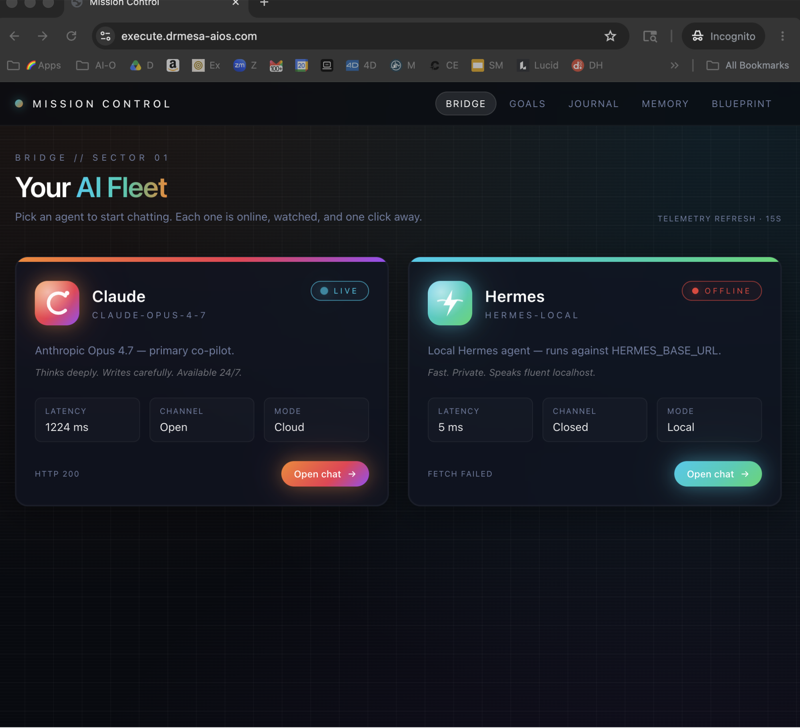
This is also why I wired the pattern into Agent OS rather than leaving it as a paste-in prompt. Agent OS ships with the gauntlet pattern built in, so Claude, Hermes and OpenClaw agents can run builder-versus-critic gauntlets on real business assets — pages, offers, lead gen — plus a prompt library with ready-made gauntlet prompts. The full setup is in my Agent OS guide, and AI Profit Boardroom members get the whole system at $69 a month locked in (normally $110).
Gauntlet Loop FAQ
Do I need to code to run a gauntlet loop?
No. Matt Shumer's prompt is public, free and three sentences long. You need a tool that can spawn sub-agents — Claude Code is the obvious one — plus a benchmark to judge against. The builders and critics handle the rest.
How is this different from asking AI to check its own work?
Self-checking is exactly what the 54-cycle study measured: 54 claimed improvements, over half actually worse or flat. A gauntlet separates builder from critic and blinds the critic to everything except rendered output versus the benchmark. The critic cannot sympathise with work it never watched happen.
Does the gauntlet pattern only work for games?
Games are the flashiest demo, nothing more. The same loop has already produced landing pages, 3D property walkthroughs and social designs, and the same feedback-loop thinking shows up in how to use GPT-6 Astra. If an asset can be screenshotted and compared to a benchmark by a critic, agents can run a gauntlet on it.
When do I stop the loop?
When you are happy — not when the critics are. Matt stopped at 5.1 because the comparison rounds still favoured the real title. Watch for the plateau, like Better Stack's honest prediction of scores stalling in the 70s, then step in as the final judge and finish the last stretch yourself.
The gauntlet loop is the closest thing yet to AI that manages its own quality: builders that split the work, blind critics that refuse to flatter, and a benchmark that keeps every agent honest. Your only jobs are choosing the bar and judging the survivor.
If you want this running on your business assets this week, join 3,000+ members inside AI Profit Boardroom for the ready-made gauntlet prompts and the Agent OS setup — or book a free AI strategy session and we will design your first gauntlet together.