Hermes Agent 0.21.3, released on 14 September 2026, is a stability patch that stops remote dashboard sessions expiring during refresh bursts and stops long-lived processes leaking duplicate state.db writer handles — and you get it by running the hermes update command. The hermes agent 0.21.3 patch notes on the official NousResearch GitHub releases page describe a rollup of roughly 338 pull requests merged since 0.21.2, aimed squarely at remote Desktop and Cloud users who have been living with flaky sessions since the big 0.21.0 release landed at the end of August. If you run Hermes anywhere that stays switched on — a VPS, a home server, a cloud workspace — this is a patch worth taking seriously rather than skipping.
📺 Watch: NEW Hermes Agent Update is WILD!
🔥 Get the Agent OS as a free bonus: AI Profit Boardroom members get the full Agent OS zip, prompt libraries, daily tutorials and weekly live coaching calls. → Get inside · Want AI SEO help 1-on-1? Book a free SEO strategy session →
Hermes Agent 0.21.3 Patch Notes: What Shipped On 14 September 2026
According to the official release notes, version 0.21.3 concentrates on two problems that mostly bit people running Hermes remotely. The first fix is to the remote dashboard: sessions no longer expire when the dashboard fires off a burst of refreshes, because token handling has been coalesced so a flurry of requests no longer invalidates your login. If you have been getting kicked out of the dashboard on a busy connection, that behaviour should now be gone.
The second fix targets long-lived processes. Before this patch, a Hermes process that stayed up for a long time could leak duplicate writer handles against state.db, the SQLite database that stores your agent's session state. Duplicate writers are exactly the kind of thing that caused the wider database trouble in this release cycle, so closing that leak matters for anyone who leaves an agent running around the clock — which is most people building a serious Hermes workspace rather than dipping in and out.
The release notes list two supported update paths: run the hermes update command, or re-run the installer. The guide to updating Hermes Agent walks through what that update flow looks like step by step, including what to check before and after the new build applies, so this article will not repeat it — the short version is that updating in place is the intended route.
If you want your Hermes stack to keep earning while everyone else is debugging theirs, the AI Profit Boardroom is where the full update-proof agent setup lives — daily tutorials, 1,000+ workflows and weekly live calls. Check out the AI Profit Boardroom → get the battle-tested Hermes setup. Prefer to talk it through first? Book a free SEO strategy session and get a personal plan for your AI stack.
Why The state.db Fixes Matter
You cannot read the Hermes Agent 0.21.3 patch notes in isolation, because 0.21.3 is the third patch in a rapid sequence that has been stabilising the database layer introduced with 0.21.0. Version 0.21.2, released on 11 September 2026, was the big one: the release notes describe a SQLite reliability campaign measuring 947 commits across 1,869 files, with 312 merged pull requests, addressing state.db fragility that 0.21.0 introduced.
The 0.21.2 notes list six headline repairs. Profile gateways, the dashboard and the cron lifecycle guard no longer open competing writers against the same database, and hosted rooms were moved out to a separate shared-state.db file. Healthy write-ahead-log databases stop wedging on a sticky DeletedWalGenerationError or a transient disk error. Full-text-search damage is now scoped to the search index only, so a broken index degrades search instead of killing conversations. One corrupt row — a bad timestamp or malformed JSON — no longer crashes the sessions list, exports or insights. Sessions bind to the correct profile instead of leaking across profiles. And opening state.db dropped from as much as 4 to 20 seconds down to roughly a hundredth of a second, because unnecessary write locks were eliminated.
If you hit the locked-database problem during that window, the Hermes state.db locked fix guide covers the symptoms and the manual recovery steps — but the honest news from the patch notes is that 0.21.2 and 0.21.3 together fix the root causes, so the right move now is updating rather than patching around it.
📺 Watch: Hermes Just Turned One AI Agent Into a Team
The Road From 0.21.0 To 0.21.3
To see why these patches were needed, look at what 0.21.0 — the Pantheon release of 31 August 2026 — actually shipped. Per the official notes it was enormous: roughly 5,800 commits, about 2,475 merged pull requests and around 2,100 issues closed. It introduced Bot Mode, which puts a society of named agents with their own faces into group chats; the hermes peer command for bot-to-bot messaging across profiles and gateways; cron jobs that load persistent memory, with a continuity option that carries output from one scheduled run into the next; live steering of running subagents; an MCP command centre with health checks and cost overlays; a Ctrl+P command palette; an agent-driven in-app browser; and six new providers.
A release that size touches everything, and the database layer is where the strain showed first. Here is the cycle at a glance, with dates and headline changes taken from the GitHub releases page:
| Version | Date | Headline changes |
|---|---|---|
| 0.21.0 — Pantheon | 31 August 2026 | Bot Mode, hermes peer, cron with memory, subagent steering, MCP command centre |
| 0.21.1 | 7 September 2026 | Rollup of 632 pull requests: modularisation, performance, provider updates |
| 0.21.2 | 11 September 2026 | The state.db patch: six SQLite reliability fixes, separate shared-state.db |
| 0.21.3 | 14 September 2026 | Dashboard session expiry fix, duplicate state.db writer handle leak closed |
Three patches in a fortnight is not a project in trouble — it is a project shipping at high speed and then paying down the reliability debt fast. The direction of travel across these Hermes Agent releases is clear: the flashy capability arrived in 0.21.0, and September has been about making it boring and dependable.
📺 Watch: Stop Overcomplicating Hermes Agent... Do This Instead!
Should You Update To 0.21.3 Straight Away?
Yes, and the case is strongest the more your setup depends on uptime. Work through it by situation:
- You run Hermes on a VPS or leave it running overnight: update now. The writer-handle leak specifically affects long-lived processes, and the cron and scheduling improvements from this cycle only pay off when the database underneath stays healthy.
- You use the remote dashboard daily: update now. The session-expiry fix removes the most annoying interruption in the remote workflow.
- You are still on 0.21.0 or 0.21.1: you are running the versions where the database problems live. Moving to 0.21.3 picks up the whole 0.21.2 reliability campaign at the same time.
- You have not installed Hermes yet: a fresh install gets you the current build anyway — the Hermes Agent installation guide covers the process from zero.
One sensible precaution the update guides in this cycle keep repeating: because the fixes centre on the state database, let any running jobs finish before you update, so nothing is writing to state.db while the new build applies.
What Hermes Agent 0.21.3 Means For Your Stack
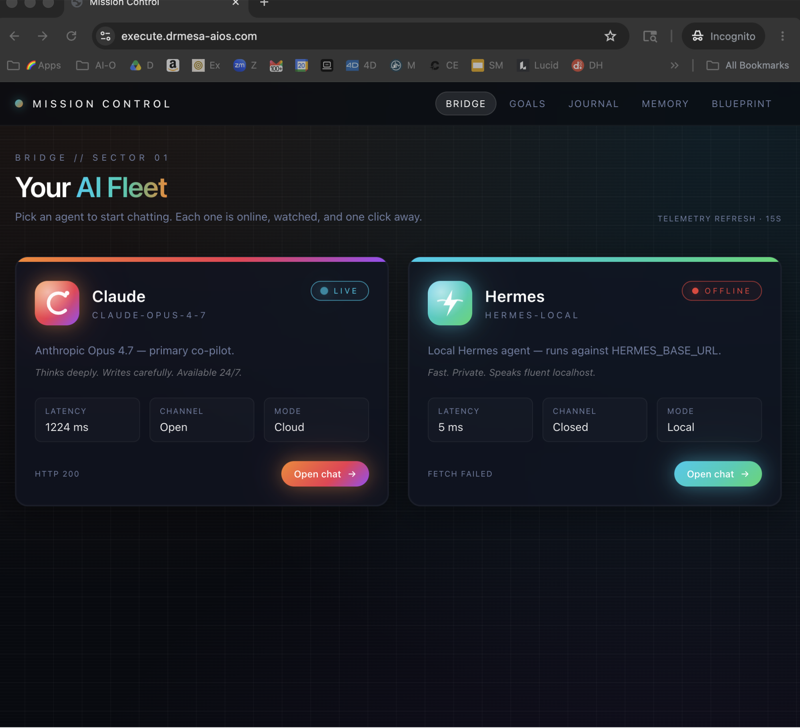
The practical takeaway from this patch cycle is that reliability is becoming the differentiator between people who dabble with agents and people who run them as infrastructure. A stable state.db is what makes persistent memory trustworthy — the Hermes memory system explains how those files and databases fit together — and it is what makes a monitoring setup like Hermes mission control worth building, because the numbers on the dashboard finally reflect an agent that stays up.
If you are structuring your whole agent operation properly, Agent OS is the resource to start from — it is the operating layer that turns a single Hermes install into an organised system of agents, prompts and schedules. And when you are choosing which model brain to run behind Hermes on the new build, the Goldie Bench write-up covers how the current brains compare in hands-on tests, which pairs usefully with a tuned Hermes setup once your install is current.
The wider lesson from the Hermes Agent 0.21.3 patch notes is about cadence. NousResearch shipped a massive capability release, watched where it creaked, and closed the gaps in three targeted patches inside two weeks. For you, that cadence means the safe strategy is simple: stay one patch behind at most, read the notes before you update, and keep your agent's working data backed up. Do that and each of these patches is a free upgrade in reliability for a system that is quietly becoming the centre of how you get work done.
If you want a Hermes agent that runs your business systems around the clock — with the update checklists, workflows and live help to keep it stable — check out the AI Profit Boardroom → join the operators inside. Want a personal roadmap for ranking with AI first? Book a free SEO strategy session and get it mapped out 1-on-1.