The hermes agent self improvement loop is a simple two-model setup where a builder writes a draft, a separate judge model scores it out of 100 and tells it what is wrong, and the builder rewrites it again and again until it passes. You set the rules once, hit run, and walk away while the loop does the boring work for you.
What the Hermes Agent Self Improvement Loop Actually Is
Most people use AI like a vending machine. You press a button, get a snack, and hope it is the right one. If it is wrong, you press again. That is not how you ship work at speed.
The hermes agent self improvement loop works more like a quality control line in a factory. You have two roles:
- The builder. This model writes the draft. It could be a landing page, an email, a chunk of code, an SOP, anything.
- The judge. This is a separate model. It does not write the work. It scores the work out of 100 and writes a clear list of what is wrong and how to fix it.
Here is the loop in plain steps:
- The builder writes the first draft.
- The judge reads it, gives it a score out of 100, and lists every problem.
- The builder reads the notes and writes a new draft.
- The judge scores again.
- This repeats until the score hits your pass mark, or until you hit a max number of rounds (say 5 or 10).
- You get the final draft and a full saved log of every round.
That is it. No magic. Just clear roles, clear rules, and a tight feedback loop.
Why This Beats Babysitting Your AI
If you have ever sat there typing "no, try again" into ChatGPT for an hour, you know the pain. You are the loop. You are the judge. And you are tired.
The hermes agent self improvement loop takes you out of the loop. That is the whole point. You stop being the bottleneck. You set the standard once, and the system holds itself to that standard.
Three big wins:
- Speed. The loop runs while you sleep, eat, or work on the next thing.
- Consistency. Every output is scored against the same rule book. No more "good one, bad one, weird one."
- Better quality. A fresh judge model sees the flaws you miss. You are too close to the work. The judge is cold and fair.
It is not cheating. It is just good process.
The 5-Part Hermes Loop Framework
You do not need a PhD to set this up. You need five steps. I call this the Hermes Loop Framework, and I teach the exact build inside the AI Profit Boardroom.
1. Define What "Done" Means
Before any model writes a word, write down what a passing result looks like. Be specific.
For a cold email, "done" might be: under 90 words, one clear offer, one CTA, no spammy words, score for clarity, score for hook, score for CTA strength. Each one gets a number. Total is out of 100.
For code, "done" might be: passes tests, no console errors, follows the style guide, comments on tricky bits.
If you cannot define done, the judge cannot grade it. That is rule one.
2. Pick Your Builder and Judge Models
This is the bit most people get wrong. They let the same model write and judge. That is like marking your own homework. Of course you pass.
Use two different models. Common pairings:
- Builder: Hermes, Claude, GPT-4, or a cheap open-source model.
- Judge: A second model with a colder, more critical tone. I like using a stronger model as judge and a cheaper one as builder. It saves money and still gives sharp feedback.
The hermes agent self improvement loop works best when the judge is harder on the builder than you would be.
3. Hit Run and Walk Away
Set the max rounds. Five is a good start. Ten if the task is tricky. Press go. That is it.
You will see the log fill up in real time. Round one, score 62. Round two, score 71. Round three, score 84. Round four, score 93. Pass. Done.
No babysitting. No typing "try again." The loop does it.
4. Graded Results and a Full Saved Log
Every round is saved. You get:
- The draft at each round.
- The judge's score.
- The judge's notes.
- The final version.
This log is gold. You can see why it improved. You can copy the winning pattern. You can use the same rubric on the next task.
You also get receipts. If a client asks "why did you do it this way?", you have the trail.
5. You Stop Being the Loop
This is the big one. Once the hermes agent self improvement loop is built, you are no longer the bottleneck. You are the rule setter. You are the boss. The AI is the worker and the quality checker.
That is how you scale. Not by hiring more people. Not by working more hours. By building loops that run without you.
Real Use Cases That Pay the Bills
Let me get specific. Here is where this loop makes money fast.
Cold Emails
Write 50 cold emails a day, each one scored on hook, offer, length, and CTA. Pick the best 10. Send them. Book calls. Get paid.
Ads
Build Google Ads or Meta Ads copy, scored on clarity, emotion, and CTA. Run 10 versions in minutes, not hours.
Landing Pages
The judge scores on headline strength, social proof, flow, and CTA. The builder rewrites until the page hits 90+. Ship it. Test it. Move on.
Coding
The builder writes a function. The judge runs the tests, checks for edge cases, and reviews style. Loop until it is clean. Saves you hours of debug.
SOPs and Training Docs
The builder drafts the SOP. The judge scores on clarity, step order, and missing info. You get a clean doc your team can actually follow.
Sites and Apps
For bigger builds, the hermes agent self improvement loop handles each chunk. Landing page today. Pricing page tomorrow. About page next week. Each one graded. Each one saved.
Objections Crushed
I hear the same pushback every time. Let me kill them now.
"AI Grading AI Is a Gimmick"
Only if you do it wrong. The trick is using a separate judge model that never writes the work. It is an adversarial judge. Its job is to find flaws. The builder's job is to fix them. Two roles. Two models. No conflict of interest.
It is the same idea as a code review. The person who wrote the code is not the one who approves it. That is how you ship safe software. It works the same way here.
"Too Expensive"
Not even close. You can run a free or cheap builder (Hermes, Llama, Mistral) with a free judge. The cost per loop is often pennies. Compare that to your hourly rate sitting there typing "no, try again" for an hour. The loop pays for itself the first time you use it.
If you want sharper results, use a stronger judge. Still cheap. Still fast. Still better than manual.
"I'll Do It Later"
No, you will not. That is the lie we tell ourselves. Later never comes. The hermes agent self improvement loop is built once and used forever. Every day you put it off is another day of slow, hand-held AI work.
Set it up this week. Use it on your next task. You will not go back.
How to Set It Up Inside the Agent OS
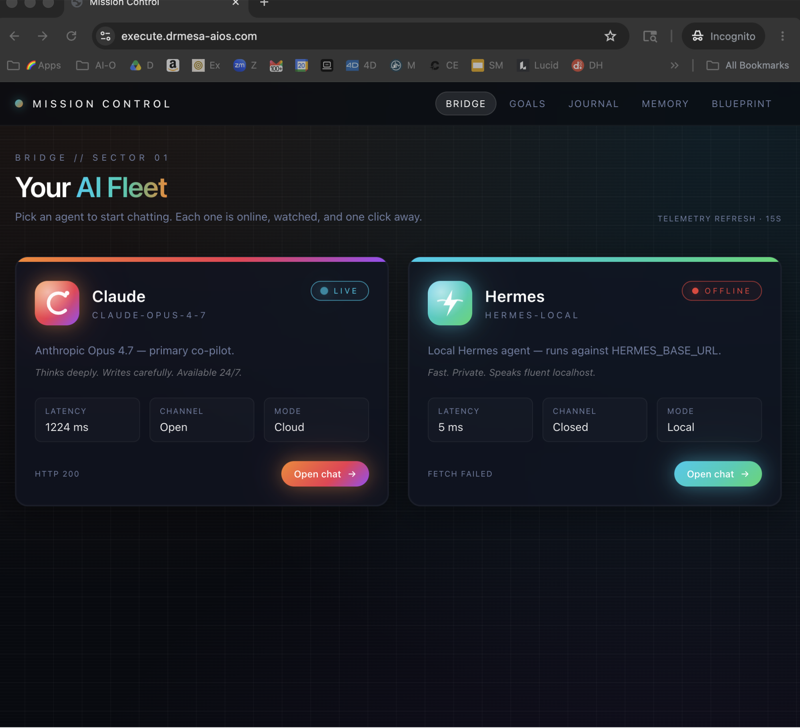
Inside the AI Profit Boardroom, we have built the Agent OS. It has the hermes agent self improvement loop ready to go. No code. No wiring. Just plug in your task, set your rubric, pick your models, and press run.
You get:
- A clean dashboard with every loop running.
- A full log of every round, scored and saved.
- Pre-built templates for cold emails, ads, landing pages, code, and more.
- A community of builders running the same loops and sharing what works.
If you are tired of babysitting AI, this is your way out. The loop runs while you sleep. You wake up to graded work, ready to ship.
The Honest Truth
Most people will read this, nod, and do nothing. They will go back to typing prompts, hitting refresh, and hoping the next output is good. That is fine. It is their time.
But if you are the kind of person who wants to ship faster, charge more, and work less, the hermes agent self improvement loop is your unfair edge. It is one of those tools that, once you use it, you cannot go back.
You stop being the loop. The loop becomes the loop. You become the boss.
Stop babysitting your AI. Build the loop. Press run. Walk away.
Ready to set this up for real? Join me inside the AI Profit Boardroom and get the Agent OS, the templates, and the full hermes agent self improvement loop ready to clone. Your first loop is waiting.