People ask me is Hermes agent good at coding almost daily now, and the honest answer is yes — with two caveats big enough to change how you should use it. I'm in a decent position to give it to you straight, because I've got no badge to defend on either side: I run Hermes every single day, and I build my biggest systems with Claude Code. That split is real, it's deliberate, and the reasons behind it will tell you more about Hermes coding than any benchmark chart.
📺 Watch: Run Hermes Agent Free Forever, Here's how...!
🔥 Get the Agent OS as a free bonus: AI Profit Boardroom members get the full Agent OS zip, prompt libraries, daily tutorials and weekly live coaching calls. → Get inside
Is Hermes Agent Good at Coding? The Two-Caveat Answer
Short version: Hermes can do real coding — proper multi-step agent coding with tools, tests and fixes, not glorified autocomplete. But two caveats decide whether your experience is brilliant or miserable. First: Hermes is a harness, and its coding ability mostly comes from the model you plug into it. Second: for heavy hands-on sessions, dedicated coding harnesses are sharper — Hermes earns its keep at a different layer entirely. Get those two right and Hermes becomes one of the most useful coding tools you own. Get them wrong and you'll conclude it's useless for reasons that were never really about Hermes.
Caveat 1: Hermes Is a Harness, Not a Brain
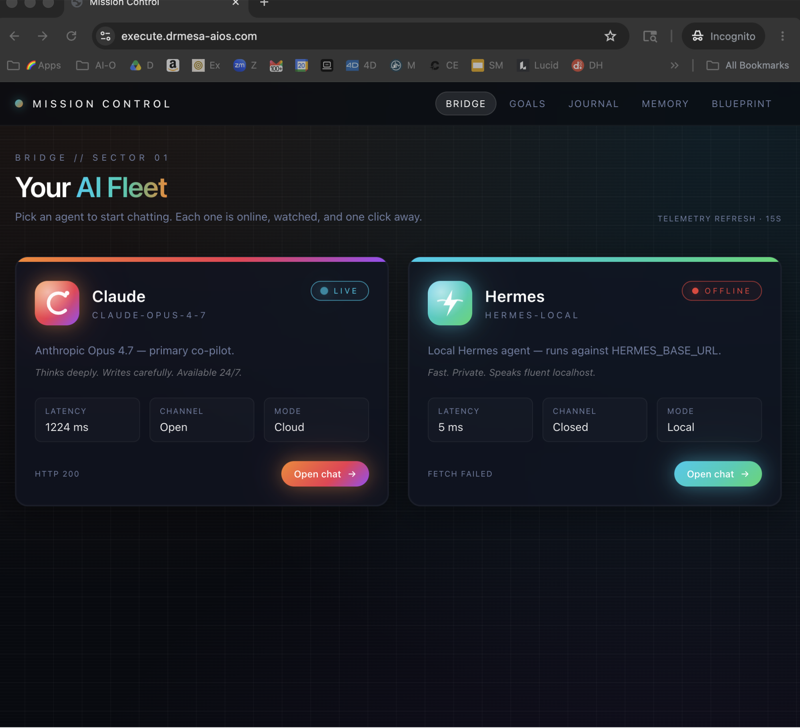
Hermes doesn't write a line of code itself. The model plugged into it does. Hermes is the harness — the body around the brain — supplying tools, file access, memory, skills and the loop that keeps an agent moving. So the first counter-question for anyone rating Hermes at coding is simple: rated with which brain?
Give it a strong one and it runs genuine agent-loop coding. When I put GLM-5.2 inside Hermes, my test verdict was a clear yes: the full agent loop held together — tools firing, memory persisting, skills loading — while the model planned, built, tested and fixed across multiple steps without me babysitting it. That's real coding-agent behaviour, not a chatbot doing impressions.
The volume evidence backs it up at scale. When DeepSeek V4 landed, Hermes users drove DeepSeek V4 Pro to the number-one traffic spot on OpenRouter — two billion-plus tokens burned in a matter of days, per OpenRouter's own rankings. Nobody burns tokens at that rate chatting about the weather; that's coding-agent workload. My Hermes and DeepSeek guide covers that exact pairing.
Now the flip side, because this is the honest page. Plug in a weak free model and expect slips: mangled edits, dropped context, loops that wander off task. The harness catches some of it — structure, retries, guardrails — but no harness can inject intelligence a model doesn't have. Most "Hermes is bad at coding" verdicts I read are actually "the free model I picked is bad at coding" verdicts wearing a Hermes costume.
📺 Watch: Hermes AI Agents Just Went Portable
Caveat 2: My Real Split — Where Dedicated Harnesses Win
Second caveat, and my own stack is the evidence. When I'm building something big — hours deep in files, iterating fast, steering closely — I reach for Claude Code, because its harness polish for hands-on coding is the best I've used. I've broken down how the two tools relate in my Hermes agent and Claude Code guide. And when the job is a long grind where the token meter matters, OpenCode is the more token-efficient runner — the details are in my Hermes vs OpenCode comparison.
So why does Hermes still touch code in my business every day? Because its superpower was never out-polishing the dedicated coding tools. Hermes is the orchestrator and the always-on layer: the thing that's awake at 3am, remembers everything, and can command the other harnesses. Judge it as a Claude Code substitute and it loses on feel. Judge it as the layer above and around your coding tools and nothing else in my Agent OS replaces it.
If you'd rather copy the delegation setup than reverse-engineer it, the AI Profit Boardroom ships my delegation playbooks plus the Agent OS they run inside. → Get the playbooks
Where Hermes Coding Genuinely Shines
So when is Hermes agent good at coding without any hedging? These four jobs.
1. Agentic Coding Runs
Give Hermes a defined build and a strong brain and it will loop through build, test and fix on its own — reading errors, editing files, re-running until things pass. That's exactly what the GLM-5.2 test proved: multi-step coding runs with tools and memory, completed end to end. For scoped jobs — a scraper, an integration script, a small feature with clear acceptance criteria — this is already dependable work.
2. Delegation: Hermes Triages, Coding Engines Implement
This is the pattern that reframed the whole question for me. You don't have to choose between Hermes and the dedicated coders — Hermes can run them. The OpenCode skill plus Kanban worker lanes turn Hermes into the triage layer: it takes the request, breaks it down, and hands implementation to a coding engine while it supervises. The full wiring is in my Hermes OpenCode integration guide. There's also a documented Codex app-server runtime for the same idea with OpenAI's coder — my Hermes agent Codex guide covers the mechanics.
3. Always-On Coding Chores
Dedicated coding harnesses are sessions: you open them, work, close them. Hermes is a resident. Cron jobs and loops mean it can watch a test suite, iterate until green, run scheduled maintenance and file a report before you've had breakfast. The coding work that happens while you sleep is the category where nothing session-based competes — because session-based tools are asleep too.
4. The Memory Advantage
Hermes remembers. Skills and its vault carry your codebase context, your conventions and the fixes that worked last time across sessions — so week three's runs are noticeably better informed than week one's. A one-off coding session starts cold every time; Hermes compounds. For a codebase you'll be touching for months, that advantage keeps growing.
📺 Watch: Grok Bot DESTROYS Hermes Agent?
Where It Doesn't Shine — The Honest List
- Deep IDE-style pair-coding. The fast, hands-on, steer-every-minute session is Claude Code's home turf, and the polish gap is real. I don't fight it; I route around it.
- Token-hungry giant refactors on a metered brain. An always-on orchestrator plus a monster refactor plus per-token pricing is an expensive cocktail. Route those jobs to a cheap volume brain or a leaner harness.
- Vision-dependent work on a text-only brain. If your model can't see — DeepSeek's own notes flag no vision, for instance — screenshot-driven frontend debugging is off the menu until you swap brains.
The Practical Recipes
If You're a Solo Developer
Run Hermes as the orchestration and always-on layer, and keep OpenCode or Claude Code as your implementation blade. Hermes triages, delegates, watches tests overnight and holds the memory; the dedicated harness handles the heavy hands-on sessions. This is my own split, and it's the highest-leverage version of the answer.
If You're a Business Owner Who Doesn't Code
You don't need pair-coding polish — you need coding-adjacent automation: scripts, scrapers, site tweaks, report generators. Hermes with a cheap volume brain handles that tier well, provided you add quality control: have it test its own output, and eyeball what ships. That combination covers most of what "coding" actually means in a small business.
The Brain Menu for Coding in Hermes
Three brains I currently rate for Hermes coding: GLM-5.2, the proven agent-loop performer with a 1M context window; DeepSeek V4, the volume-economics pick the OpenRouter numbers vindicated; and Kimi K3, frontier-level open weights you can run for free. Don't take any of it on faith, mine included — I test these side by side on Goldie Bench, my own testing setup, and running your real task through two brains will beat any leaderboard opinion.
The Verdict Table
| Coding job | Hermes fit | Better tool, if any |
|---|---|---|
| Scoped agentic builds (build-test-fix loops) | Strong with a strong brain — the GLM-5.2 test's territory | None needed |
| Orchestrating coding workers | Its superpower — triage plus delegation | None; this is the job |
| Overnight and scheduled coding chores | Best in my stack — cron, loops, iterate-until-green | None; session tools are asleep |
| Long hands-on pair-coding sessions | Capable, but not the sharpest feel | Claude Code |
| Token-heavy giant refactors | Works, but watch the meter | OpenCode, or a cheap volume brain |
| Screenshot-driven frontend debugging | Depends entirely on the brain's vision | A vision-capable model first |
| Remembering your codebase over months | Standout — skills and vault compound | None |
FAQs
Is Hermes agent good at coding?
Yes, with the two caveats this page is built on: the coding ability mostly comes from the model you plug in, and for heavy hands-on sessions a dedicated coding harness is sharper. With a strong brain, Hermes runs genuine multi-step coding loops — and as an orchestrator and always-on coder it beats the dedicated tools at their blind spots.
What's the best coding model for Hermes?
My current menu: GLM-5.2 for the proven agent loop and 1M context, DeepSeek V4 for volume economics, Kimi K3 for frontier-level open weights at no cost. Pick by running your own task through two of them side by side rather than trusting anyone's chart — mine included.
Should I use Hermes or Claude Code for coding?
Both, with a division of labour. Claude Code takes the deep hands-on building sessions; Hermes takes orchestration, delegation, overnight chores and memory. That's exactly how my own stack splits, and neither tool replaces the other's job.
Can Hermes code overnight?
Yes — this is one of its genuine edges. Cron jobs and loops let it watch tests, iterate until green and run scheduled maintenance while you sleep. Session-based coding tools can't compete here, because they only work while you're driving them.
Does Hermes remember my codebase?
Yes, and it compounds. Skills and the vault carry codebase context, conventions and past fixes across sessions, so later runs start informed instead of cold. It's the quiet advantage that one-off coding sessions never accumulate.
The Verdict
So — is Hermes agent good at coding? Yes, with the caveats intact. But the question itself is slightly wrong, and the correction is the real takeaway. "Which tool codes best" assumes you're choosing one. The better question is which layer each tool owns: dedicated harnesses own the hands-on session, and Hermes owns everything around it — orchestration, delegation, the overnight shift and the memory. Give it a strong brain and hand it that layer, and it isn't just good at coding. It's the reason the rest of your coding tools turn up organised.
Want this whole split built with you rather than described at you? The AI Profit Boardroom includes the Agent OS with Hermes and the coding harnesses wired together, four weekly coaching calls, daily tutorials, and 3,700+ business owners running the same setup. → Join the AI Profit Boardroom