The Sonnet 4.8 release matters most for business, and this post is the founder and agency view of how to actually deploy it for ROI in 2026. After running it across my own stack and watching members of the Boardroom roll it out across their agencies and SaaS companies, I'm confident this is the default model for business AI work for the foreseeable future.
This is the business view of the model. I'll walk through the real use cases driving revenue and savings, the actual ROI numbers I'm seeing across operators, and how to deploy it fast without burning a weekend on infrastructure work.
🔥 Want my Sonnet 4.8 business playbook? AI Profit Boardroom has Sonnet 4.8 prompts, workflows, and weekly business-focused coaching. → Get the playbook
Why Sonnet 4.8 For Business
There are three reasons Sonnet 4.8 has become the default for business work, and they all compound.
The first is agent reliability. Agents need to actually work end-to-end without falling over halfway through a task, and Sonnet 4.8 is the most reliable model I've tested for multi-step agent workflows. That reliability is the difference between a demo and production.
The second is code quality. The code Sonnet 4.8 ships is genuinely shippable, which means your team spends less time reworking AI output and more time delivering. Less rework equals more output, and that maths compounds fast at scale.
The third is price-to-performance. Sonnet 4.8 sits at mid-tier pricing but delivers top-tier output for the vast majority of business work. For founders and agencies, that's the sweet spot — you're not paying Opus prices for tasks that don't need Opus reasoning.
Top 5 Business Use Cases
Here are the use cases ranked by ROI based on what I'm seeing across the Boardroom membership.
1 — Code generation
ROI is massive. Developers save 30-50% of their time, which means a team of three suddenly outputs like a team of five. This alone is the strongest argument for adoption in any dev-heavy business.
2 — Content drafts
ROI is high. First drafts come out roughly 10x faster, which compresses the timeline from idea to publish dramatically and frees creative time for the parts AI can't do.
3 — Customer support
ROI is high. A 24/7 FAQ responder with intelligent escalation handles the bulk of inbound support volume and only routes humans the cases that genuinely need them.
4 — Research
ROI is medium-to-high. Research depth and speed both jump, and the time savings are bigger than the surface metric suggests because they unlock work you wouldn't have done otherwise.
5 — Sales outreach
ROI is medium. Personalised at scale beats generic templates by a wide margin, and the conversion lift is real even with relatively basic prompt design.
Watch The Benchmark
For the agent context that frames how Sonnet 4.8 fits the broader stack, this Hermes walkthrough is the canonical reference.
Real Business ROI Numbers
These are real numbers from clients and from my own work.
Agency owner
Sonnet 4.8 deployed across content workflows produced 50% faster drafts and around £4,000 a month in cost savings. The team didn't shrink — they shipped more work for the same headcount.
SaaS founder
Sonnet 4.8 in code generation drove 30% faster shipping and roughly £8,000 a month in revenue acceleration. Faster ship times compound directly into top-of-funnel growth.
Consultant
Sonnet 4.8 across research and drafting saved 10 hours a week and unlocked around £4,000 a month in additional billable time. For a consultant, that's not cost savings — that's pure upside.
Coach and educator
Sonnet 4.8 in cohort delivery produced better content faster and supported a 20% pricing increase. Better deliverables mean you can charge more without losing customers.
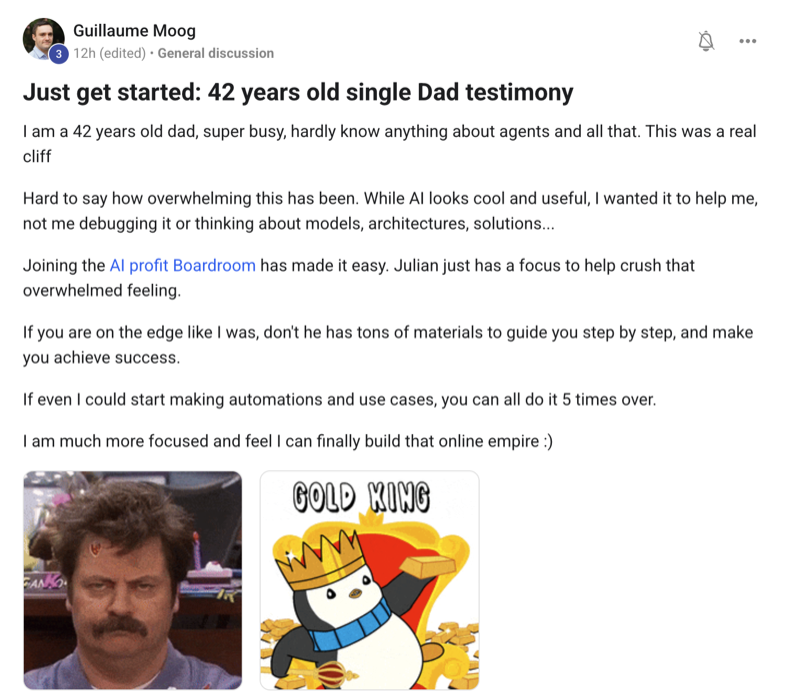
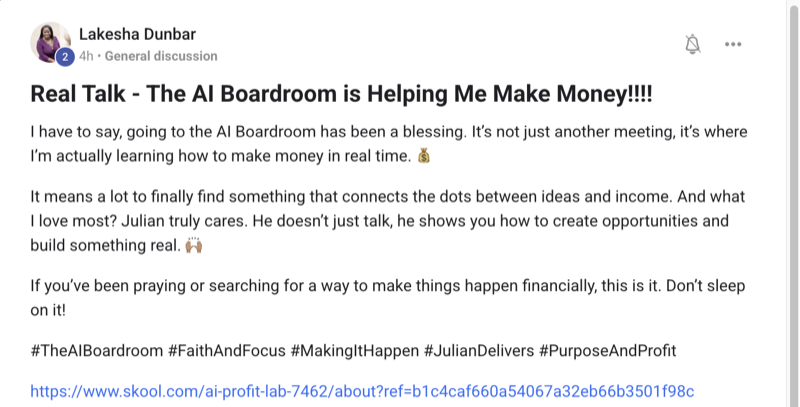
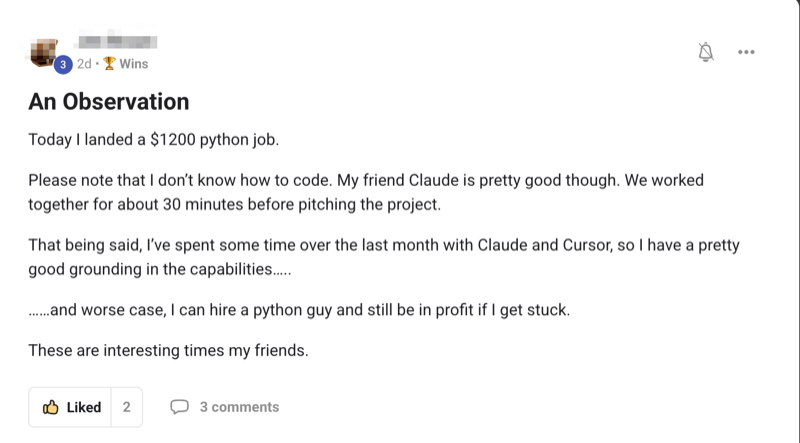
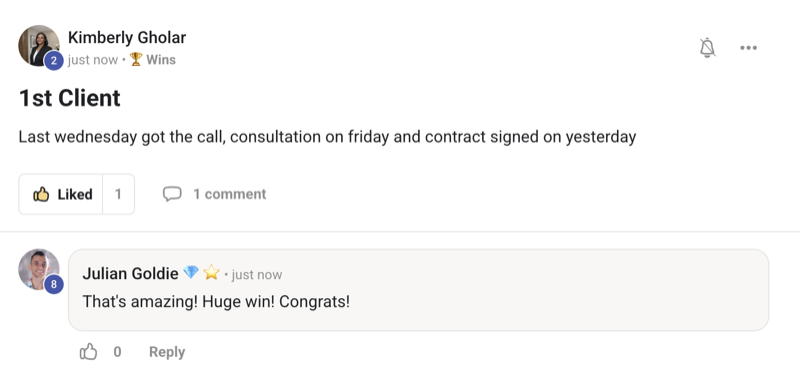
These aren't projections — they're operators in the Boardroom who have shared their actual numbers with the community.
Sonnet 4.8 In Business Stacks
How you deploy depends on what kind of business you run.
Stack A — Founder
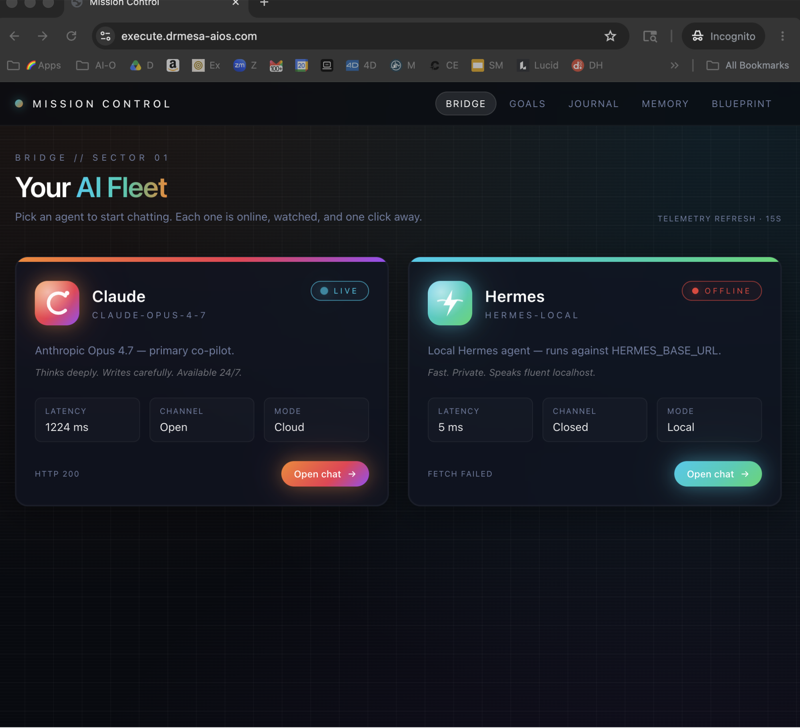
Claude Code with Sonnet 4.8 for build, Hermes for the agent layer, and OMI Obsidian for the second brain that captures everything. See OMI Obsidian for the productivity layer in detail.
Stack B — Agency
Claude Code for client builds, Hermes for internal ops, and custom skills configured per client so you can switch context without losing fidelity.
Stack C — Consultant
Claude Code on an as-needed basis, Hermes for the research and drafting work that dominates your week, and OMI for capture so nothing gets lost between calls.
Each stack works in production. Pick the one that matches your weekly rhythm and stop overthinking the architecture.
Pricing For Business
Sonnet 4.8 lands at $3 per million input tokens and $15 per million output tokens, which translates to predictable monthly costs for typical business use.
A solo founder using it lightly comes in around £20-50 a month. A heavy-use agency lands at £100-500 a month. Enterprise deployments cross £1,000 a month and keep climbing with usage.
Compare that to a £400-1,000 a month VA hire or a consultant at £200-500 an hour, and Sonnet 4.8 is dramatically cheaper for the equivalent output. The unit economics aren't close.
Setup Time For Business
You can be at first ROI in about 90 minutes if you don't get distracted. The first 15 minutes are getting your API key and access sorted. The next 15 minutes are setting up Claude Code or picking the agent framework you'll use. The next 30 minutes are crafting your first prompt template against a real business task. The final 30 minutes are deploying that workflow against actual production data.
By Friday of your setup week, you've already got ROI showing in your numbers.
Five Sonnet 4.8 Workflows To Build First Week
For business owners, these are the five workflows that hit ROI fastest.
1 — Customer FAQ responder
Cuts inbound support time dramatically and frees humans for the cases that actually need them.
2 — Content brief generator
Provides your content team with structured briefs in minutes instead of hours, which compresses the editorial cycle.
3 — Sales email drafter
Personalised outreach at scale, which beats generic templates by a wide enough margin to move your conversion numbers.
4 — Research summariser
Daily research delivered to your inbox before you start work, so you stay informed without losing your morning.
5 — Internal SOP generator
Documents your processes so they survive staff turnover and onboarding doesn't require you to be in the room.
These five workflows hit immediate ROI for almost every business I've seen deploy them.
Common Business Mistakes With Sonnet 4.8
Three mistakes I see business owners make repeatedly.
1 — No prompt library
Reusing inconsistent prompts produces inconsistent outputs, which is the worst possible outcome at scale. Build a library, refine it over time, and treat your prompts like code that needs version control.
2 — No QA layer
Sonnet 4.8 is excellent but it's not perfect, and any client-facing output needs a human review pass. The cost of catching errors before they ship is trivial; the cost of catching them after isn't.
3 — Cost spirals
Track usage and set budgets early. The unit economics are great, but they can add up at scale if you're not paying attention to which workflows are burning the most tokens.
Sonnet 4.8 Vs Other Models For Business
Here's the quick decision matrix by use case.
| Use case | Best model |
|---|---|
| Code | Sonnet 4.8 |
| Reasoning | Sonnet 4.8 (or GPT-5) |
| Long context | Gemini 3 |
| High volume cheap | Haiku |
| Hardest tasks | Opus |
| Agent workflows | Sonnet 4.8 |
Sonnet 4.8 wins the majority of business categories outright, which is why it's the default rather than the specialist.
Migration From Sonnet 4.5
If you're already on Sonnet 4.5, the migration is straightforward and worth doing.
Step 1 — Audit current workflows
List everything currently running on 4.5 so you know exactly what's in scope for the migration.
Step 2 — Test 4.8 on samples
Run a representative slice of your workflows against 4.8 and compare outputs against your existing baseline.
Step 3 — Migrate or hold
If 4.8 produces better outputs, migrate. If it's parity, hold — there's no urgency to switch for the sake of switching, and stability has its own value.
Sonnet 4.8 + Hermes For Business
This is the combo that's quietly become the default agent stack for business.
Hermes handles the orchestration layer — workflow management, scheduling, multi-step coordination — while Sonnet 4.8 powers the reasoning underneath. Together they form what I'd call the best agent stack for business in 2026.
See Hermes AI Agent Framework 2026 for the full agent layer setup.
Sonnet 4.8 + Claude Code For Business
For dev-heavy businesses, this combo is the productivity unlock of the year.
Claude Code is the IDE; Sonnet 4.8 is the engine that powers it. SaaS founders shipping with this stack are the ones outpacing teams that are still on traditional tooling.
See Claude Code SEO Agent for the SEO automation pair that extends the same pattern into content.
Cost Optimisation For Business
There are three optimisation patterns that meaningfully cut your bill at scale.
1 — Tiered model use
Use Haiku for triage and basic tasks, Sonnet 4.8 for the bulk of deep work, and reserve Opus for the genuinely hard problems. Stop sending easy work to expensive models.
2 — Prompt caching
For repeated context — system prompts, knowledge base content, anything you reuse — turn on prompt caching. The cost reduction is dramatic at scale.
3 — Batch processing
Group requests where the latency tolerance allows it. Batch APIs are significantly cheaper than per-request calls.
🚀 Want hands-on business deployment? AI Profit Boardroom has weekly live coaching to deploy Sonnet 4.8 for your business. → Join here
Privacy + Compliance
Privacy and compliance matter for any serious business deployment, and the answer differs by sensitivity tier.
Anthropic's API data is not trained on, assuming you're on the correct plan, which makes the baseline acceptable for most business work. For sensitive industries — health, legal, finance — add a data redaction layer in front of the API or pair Sonnet 4.8 with local Hermes for the sensitive parts of the workflow.
For client work, disclose AI use where regulations or client expectations require it, and use the legal language your clients expect to see in their contracts.
Daily Reality With Sonnet 4.8
Here's what a real day looks like for a business owner running this stack.
At 7am the agent brief — powered by Sonnet 4.8 — summarises your inbox and the day ahead. During the working day, Claude Code with Sonnet 4.8 powers your build and communication work. In the evening, a Hermes summary running on Sonnet 4.8 closes the loop on the day's progress and queues tomorrow.
Total Sonnet 4.8 cost for a solo operator is £30-50 a month. Total time saved is 10-15 hours a week. The ROI is obvious before you've even finished your second month.
When To Skip Sonnet 4.8 For Business
There are three legitimate cases for skipping Sonnet 4.8 in favour of something else.
1 — Cost-extreme workloads
If you're running millions of tokens a day on simple tasks, use Haiku and save the money for the workloads that actually need 4.8.
2 — Ultra-long-context analysis
For documents that exceed Sonnet's context window comfortably, Gemini 3 is the better choice.
3 — Pure local privacy
For workloads that absolutely cannot leave your infrastructure, run a local Llama or Hermes setup. The quality drop is real but acceptable for the privacy guarantee.
For everything else, Sonnet 4.8 is the right default.
Productising Sonnet 4.8 Services
If you sell AI services to clients, these are the three offerings that work in 2026.
Service 1 — AI workflow setup
Charge £1,500-3,000 to set up Sonnet 4.8 workflows for clients end-to-end. Demand is far higher than supply and most clients can't tell good from great — they just want it working.
Service 2 — Custom skills
Charge £500-2,000 per custom skill. Recurring revenue follows because clients always want more once the first one ships.
Service 3 — Ongoing AI ops
Stack a £500-1,500 a month retainer on top for ongoing operation, monitoring, and iteration. This is where the real income lives long-term.
Three offerings, real revenue, and a clear ladder for clients who want to grow with you.
What's Coming Next
Anthropic ships fast and the roadmap is publicly trackable.
Sonnet 4.9 is expected in Q3 2026, Opus 5 is likely in Q4 2026, and tighter native agent integration is rumoured. Don't bet your business on roadmap items — use what's shipped today and adapt as the next versions land.
FAQ — Sonnet 4.8 For Business
Best business use case?
Code generation paired with agent workflows. That's where the ROI is highest by a wide margin.
Realistic ROI?
5-50x for most knowledge businesses, depending on how much of your work is automatable.
Setup time?
About 90 minutes to your first deployed workflow.
Cost for solo?
£20-50 a month is typical for most solo operators.
Cost for team?
£100-500 a month for a typical small-to-medium team.
Need technical skills?
For Claude Code, yes — basic dev skills required. For Hermes setup, minimal. For prompt-only workflows, none at all.
Best first workflow?
A customer FAQ responder. It pays back inside a week and proves the loop works before you scale.
Related Reading
- Claude Code SEO Agent — Sonnet 4.8 deployed in code.
- Hermes AI Agent Framework 2026 — the agent layer.
- Kimi 2.6 Benchmark — the alternative model worth comparing against.
📺 Video notes + links to the tools 👉
🎥 Learn how I make these videos 👉
🆓 Get a FREE AI Course + Community + 1,000 AI Agents 👉
Sonnet 4.8 is the default model for business AI in 2026 — deploy it this week and watch the ROI compound.