The Hermes AI agent framework hit 106,000 GitHub stars this month, and that number isn't a vanity metric — it's a real signal of what's quietly become the most reliable open-source AI agent in 2026. This guide breaks down exactly what you can build with Hermes, the step-by-step path from zero to your first working build, and where the framework genuinely beats every other option I've tested.
This post covers the full picture of what's possible with Hermes today. You can build a fifty-page SEO website automatically, run multi-agent teams in parallel on the same project, set up daily automation that runs twenty-four-seven without your involvement, connect channels like Telegram and Discord for live customer ops, and schedule tasks with full mission control visibility. Each of these is a real workflow that members are running, and I'll walk through how to set them up.
🔥 Want my Hermes build playbook? AI Profit Boardroom has my 2-hour Hermes course plus the 6-hour OpenClaw course plus weekly live coaching. → Get the playbook
Why 106K GitHub Stars Matter For The Hermes AI Agent Framework 2026
The star count is shorthand for three structural advantages that are hard to see otherwise.
The first is an active community. More stars correlate strongly with more contributors, and more contributors mean faster bug fixes and a steadier stream of new features. You're not relying on a small core team to keep the framework alive — you've got a global volunteer pool actively pushing it forward.
The second is trust. Developers vote with stars and 106K is the highest count in agentic AI right now. That's the entire community choosing Hermes over the alternatives, which is the most useful proxy for tool quality I've found.
The third is future-proofing. Communities don't abandon projects at this scale, which means Hermes will be around long-term and any investment you make in learning it compounds rather than evaporates. For builders making bets that take months to pay back, this matters more than any individual feature.
What You Can Build With The Hermes AI Agent Framework 2026
Six categories of build that consistently deliver real ROI for the operators running them.
The first is a full fifty-page SEO website using Hermes Kanban orchestration. The Kanban layer turns the framework into a project manager that breaks down a website into tasks, assigns them to agents, and ships the finished site without you in the loop. I cover the workflow in Hermes Kanban.
The second is a multi-agent SEO content factory built on Hermes Agent Swarms. The swarm pattern lets you run three or more agents in parallel — one researching, one drafting, one reviewing — and the throughput is dramatically higher than single-agent setups. See Hermes Agent Swarm for the full setup.
The third is a personal AI second brain combining OMI, Obsidian, and Hermes. This is the foundation everything else builds on because it gives every agent context about your work, your decisions, and your past conversations. See Hermes Second Brain for the thirty-minute install.
The fourth is a 24/7 customer support bot via Telegram or Discord integration. The framework handles channel auth, message routing, and reply generation natively. See Telegram AI Agent for the channel setup.
The fifth is automated daily research reports built on scheduled tasks pulling from web search. You set the schedule once and the agent delivers fresh competitive intelligence every morning before you open your laptop.
The sixth is custom skills that compound over time. Build a skill once and reuse it forever across every workflow you run. The compounding effect is what separates Hermes from chat-based AI tools — your investment in skills doesn't evaporate at the end of each conversation.
Watch The Full Framework
That's the comprehensive Hermes framework guide for 2026 covering install, configuration, and the first few real builds.
Step-By-Step Build Process
The path from zero to first working build is shorter than most people expect.
Step one is the install, which takes about five minutes. Grab the install command from GitHub and paste it into your terminal. If you're non-technical, paste the GitHub URL into Claude Code and ask it to install Hermes for you — the AI handles the terminal step so you don't have to.
Step two is the memory layer, which takes about thirty minutes. Set up Obsidian and OMI on your machine and point Hermes at the vault. This is the foundation that makes every later build dramatically better. I cover the full setup in Hermes Second Brain.
Step three is your first mission. Type a real business problem into Hermes — something like "Build me a landing page for my AI consulting service with hero, three benefits, and a signup form" — and watch the agent work. The first mission is what proves the system actually works end-to-end.
Step four is your first custom skill. Pick one repetitive task you do daily and build a skill for it. The time investment is small and the savings compound forever after because the skill runs every time you need that task done.
Step five is your first scheduled task. Wire up a piece of daily automation that runs without you — a morning research summary, a daily content brief, or an inbox audit. By the end of day one you've used every major piece of the framework.
Watch Hermes Workspace
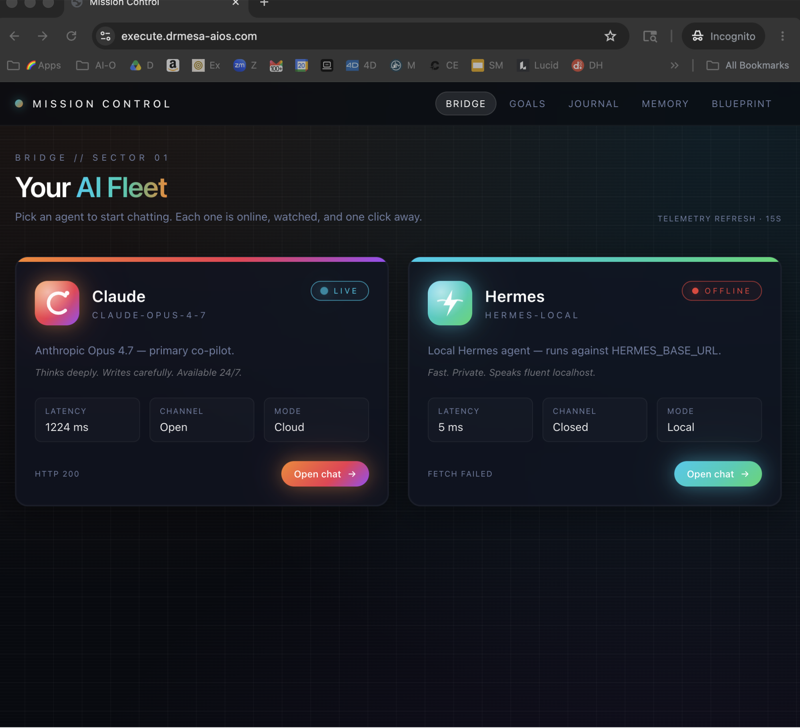
The mission control walkthrough above shows how multi-agent setups look once they're running, and the visual layer is genuinely the easiest way to understand what the swarm is doing.
What 106K Star Projects Have
Three structural advantages separate projects at this scale from smaller alternatives.
The first is comprehensive documentation. Every Hermes feature has docs, every edge case has been written up by someone in the community, and there's a working example for almost any pattern you'd want to build. That alone saves hours of trial and error.
The second is active issue tracking. Bugs get reported, triaged, and fixed quickly because the contributor pool is large enough to handle real volume. You're not waiting weeks for a fix on a critical bug.
The third is regular updates. New features ship monthly and the framework keeps pace with the underlying model improvements. Hermes is currently on v0.9 and when v1.0 ships, the capability jump will be significant — large communities deliver on roadmap promises in a way smaller projects struggle to.
Why Hermes Beats Alternatives
The specific advantages versus the main competitors are worth being explicit about.
Versus OpenClaw, Hermes is more reliable, less buggy, and has a cleaner setup. The tool tax is dramatically lower, which matters more for daily use than peak capability. I cover this honestly in Accomplish AI Vs OpenClaw — the same conclusion applies for Hermes versus OpenClaw.
Versus Claude Code, Hermes is free and open source, and the framework is more agentic-focused rather than dev-tool-focused. Claude Code is excellent for coding but Hermes is the better fit for non-code agent ops.
Versus Antigravity, Hermes is more mature and has a larger ecosystem behind it. Antigravity is genuinely strong for vibe coding but it's still in public preview, and for production agent work you want something with more battle-testing.
For 2026, Hermes is the framework default and it's not particularly close.
What You Can't Build With Hermes (Yet)
Be honest about the limits, because pretending the framework does everything would mislead you.
Native mobile apps are the first limitation. Hermes is desktop and server-first, and mobile use happens through the Workspace web UI rather than a native iOS or Android app. For most operators this doesn't matter but it's worth knowing.
Complex GUI apps are the second. Hermes outputs code rather than designs, and the final polish on a sophisticated UI often needs human design judgement. The framework gets you ninety percent of the way there but the last ten percent is still you.
Real-time voice agents are the third. Voice integration via 11Labs and similar services works but it isn't as native as some specialised tools. For a voice-first product you'd probably want a dedicated voice agent framework alongside Hermes.
For ninety percent of use cases, none of these matter. For the other ten, plan accordingly.
🚀 Want guided Hermes build help? AI Profit Boardroom has weekly live coaching where I'll set up specific builds with you on a screen-share. → Join here
How Solo Operators Build With Hermes
Three high-leverage builds I'd recommend for any solo operator getting started.
The first is the personal AI second brain. Start here because it's the foundation that makes every other build dramatically better. Without persistent memory, your agents start from scratch every conversation and you lose most of the compounding value.
The second is daily SEO content automation. Pair Hermes with the Claude Code SEO Agent workflow and you've got a content factory that publishes without you. For solo operators trying to scale content output, this is the highest-leverage single build.
The third is customer support automation. Free up your inbox time by routing routine queries through an AI agent that handles them automatically. The hours saved here compound across every other thing you're trying to do.
These three builds together transform what one person can realistically ship in a quarter.
How Agencies Build With Hermes
For agency owners, the priority order is different and the financial logic is sharper.
The first is a productised SEO service built on multi-site automation. Sell it as a £5K-per-month retainer and the margin is dramatic because Hermes does the heavy lifting. This is the build that turns Hermes from a productivity tool into a revenue tool.
The second is lead generation systems with multi-source scrapers. Scale prospect lists for outreach without scaling headcount, and the per-prospect cost drops to near zero.
The third is internal automation that reduces fulfilment cost. Free up your team for strategic work and let Hermes handle the routine pieces of every client engagement. Margin enhancement compounds across every project.
For agencies, Hermes is genuinely a margin multiplier rather than a productivity tool.
What Makes Builds Stick
Three rules that separate builds that pay back from builds that gather dust.
The first is to build for repetitive problems. The five-minute task you do daily is the perfect first build because the savings compound every single day. Don't start with the impressive build — start with the boring one that pays back fastest.
The second is to iterate over time rather than trying to build perfectly on day one. Refine weekly, add edge cases as you hit them, and let the build mature naturally. Trying to ship a perfect v1 is what kills most agent projects before they prove their ROI.
The third is to combine builds rather than building monoliths. Three skills working together is more powerful than one mega-skill, and the modular approach is dramatically easier to debug when something breaks.
Daily Reality Of Building With Hermes
Here's what an actual day looks like for me running this stack.
At 8am the daily summary scheduled task fires and dumps a fresh briefing into my inbox. By 9am I've reviewed it and fired the SEO content build for the day's target keywords. At 10am I check the Hermes Workspace dashboard, which shows progress across all the parallel agents working on the build. At lunch the lead research mission completes and drops fresh prospects into the CRM. In the afternoon I fire the Telegram bot tasks that handle routine customer ops while I focus on strategic work. By evening I review the day's outputs, comment on anything that needed adjustment, and plan tomorrow's queue.
That same workload used to eat twelve-plus hours of my day and now it happens in scattered moments while I focus on higher-leverage work. The framework genuinely changes the unit of output you can ship as a solo operator.
Cost To Run
Running Hermes locally on Ollama costs zero pounds per month, which is the entire reason most members start there. You trade off some throughput and a slightly weaker model versus cloud frontier, but the price tag is unbeatable.
Running Hermes on cloud LLMs lands at £20-100 per month depending on volume. For most operators this is rounding error against the time saved.
For most use cases, hybrid is the right answer — use cloud for important work where quality matters and local for routine tasks where cost matters. The hybrid approach saves the most across the year.
When To Use Hermes Vs Alternatives
A quick decision tree for picking the right tool for the job.
Use Hermes when you want maximum reliability, when you need agent flexibility across multiple workflows, and when you're committing for the long term. The learning investment pays back over months and years.
Use OpenClaw when you need specific channel integrations and you're willing to live with occasional bugs, or when you want native multi-agent depth that Hermes doesn't quite match yet.
Use Accomplish when you're non-technical and you want the fastest possible setup with the least friction. Accomplish wins on time-to-first-working-agent, even though Hermes has more depth.
I cover the full comparisons in Accomplish AI Vs OpenClaw and Agent Zero Vs OpenClaw if you want the deep dive.
FAQ — Hermes AI Agent Framework 2026
Why is Hermes 106K stars?
It's the most reliable open-source AI agent, has an active community, and was originally built by News Research with a focus on production-grade reliability.
Is it really free?
Yes — it's open source forever, and the only costs are the LLM tokens you use.
What can I actually build?
Almost anything in the agent ops space — websites, automations, research workflows, content factories, support bots, and custom skills tailored to your business.
Is the setup hard?
The standard install is roughly five minutes. The full framework with memory, swarms, and channels takes one to two days of incremental setup, but you can ship useful work after the first hour.
Will Hermes 1.0 launch soon?
The framework is currently on v0.9 and v1.0 is expected to ship significant capability jumps. The roadmap is public and active.
Should I learn Hermes or OpenClaw?
For 2026, Hermes is the better long-term bet — more reliable, more active, and lower tool tax for daily use.
How long until ROI?
Most builders see ROI within the first week of their first build because the time saved on a single repetitive task compounds quickly.
Further Reading On Agent OS Guide
For deeper walkthroughs on the topics in this article, the Agent OS Guide library has these worth bookmarking.
- Agent OS Guide — the full library of agent OS walkthroughs and setups.
- Hermes Agent OS Q&A — answers the core questions about running Hermes as your agent OS.
- Hermes SEO Agent OS — Hermes wired up for an SEO-focused agent OS build.
- NotebookLM Agent OS — how NotebookLM slots in as memory for a Hermes setup.
Related Reading
- How To Setup Hermes Agent — install detail.
- Hermes Second Brain — memory setup.
- Hermes Workspace — mission control.
- Hermes Agent Swarm — multi-agent.
Latest Updates
- Hermes Agent Goals (NEW Persistent Update FREE) — major new feature.
- Atomic Chat Vs Ollama (Free OpenClaw Setup 2026) — free setup guide.
- 🌐 Read on juliangoldieaiautomation.com — sister-site take.
📺 Video notes + links to the tools 👉
🎥 Learn how I make these videos 👉
🆓 Get a FREE AI Course + Community + 1,000 AI Agents 👉
The Hermes AI agent framework hitting 106K GitHub stars isn't accidental — for builders serious about AI in 2026, it's the foundation everything else builds on.