The Agent OS for Hermes is the only reason I stopped guessing why my agents broke and started fixing them in five minutes flat.
Let me show you exactly how I debug a Hermes agent now, because it's a completely different game.
For months I ran agents the way most people do.
I gave one a task, waited, and hoped the output was good.
When it wasn't, I had no idea why, so I'd rewrite the whole prompt and pray.
That's not debugging, that's superstition.
Why I needed the Agent OS for Hermes in the first place
My agents had been hiding things from me.
Not on purpose.
I'd just been trusting the final answer and never seeing what really happened to get there.
The real mistake was often buried in the middle the whole time.
That's the black-box problem, and it's bigger than people think.
You tell the agent what to do, you get a result, but the entire middle part is invisible.
The middle is exactly where things break.
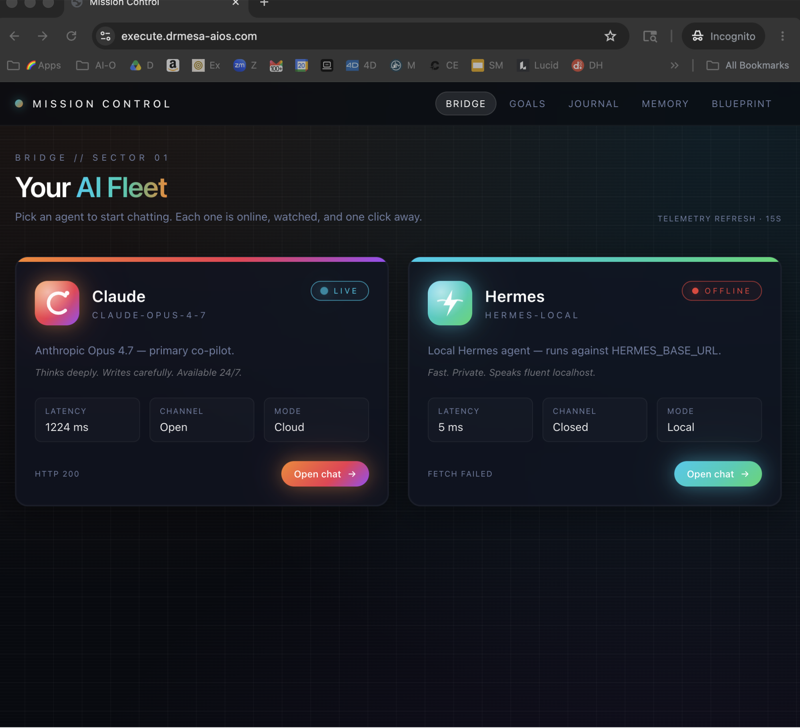
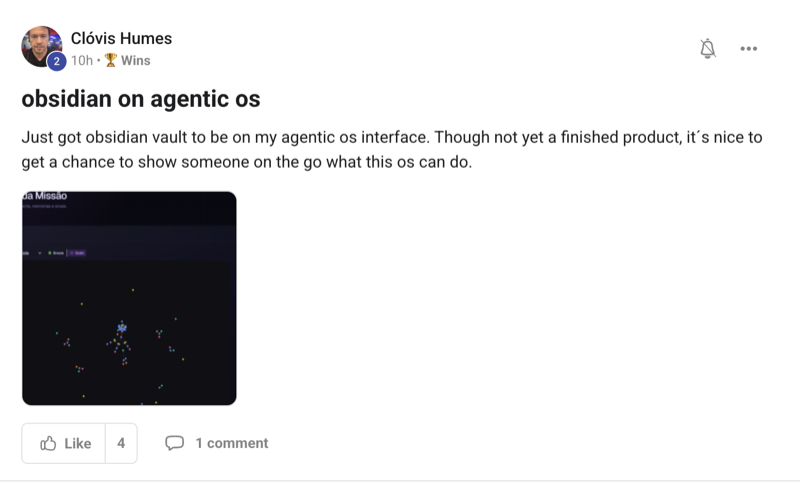
The Agent OS for Hermes fixes that by giving me Mission Control, a dashboard that shows me the whole journey instead of just the ending.
🔥 Want my exact debugging setup? Inside the AI Profit Boardroom I've got a full Agent OS for Hermes walkthrough with step-by-step videos. Plus weekly coaching calls where you can screen-share your own journey and get it read live with 3,600+ members. → Get access here
My step-by-step debugging process
Here's the exact routine I run when an agent gives me a weak result.
First, I open the journey map for the failed run inside the Agent OS for Hermes.
A journey is just the full path the agent took, every prompt, tool call, tool result, model switch, and memory pull.
Second, I do not read every step from the top.
I start at the end where the result landed, then walk backwards.
Third, I stop at the first step that looks off.
Nine times out of ten the weak link is only one or two steps before the final answer.
Fourth, I open that exact step and read the input that went in and the output that came back.
Fifth, I fix that one thing, whether it's a bad source, a stale memory pull, or a model that switched at the wrong moment.
That's it.
No teardown, no rewriting the whole workflow, just a targeted repair.
The content agent that kept going weak
Let me give you a real example.
I run a content agent to bring more people into the AI Profit Boardroom.
It researches topics, builds outlines, and drafts posts.
For a while, some posts came out flat and I had no clue why.
I opened the journey map and saw the exact step where it pulled the wrong source.
I fixed that one step instead of rebuilding the entire content workflow.
The next batch of posts was sharp again.
I walk through more of these wins in my Hermes agent use cases post if you want the full list.
The research agent and the stale memory bug
Here's another one.
I use a research agent to plan future topics for the Boardroom.
It reads what people are asking about, compares ideas, and hands me a short list.
One day the short list felt totally off.
I opened the journey and saw the agent had leaned on stale memory instead of searching fresh.
One look, one fix.
That research agent now feeds way better topic ideas into everything I build.
This is the whole shift.
You don't get better agents by prompting harder and harder.
You get better agents by finding the exact step that's breaking and fixing that step.
Old debugging vs Agent OS debugging
| Debugging step | The old way | With Agent OS for Hermes |
|---|---|---|
| Spotting the failure | Rerun and hope | Open the journey map |
| Locating the cause | Guess the prompt | Walk backwards to the off step |
| Reading what went wrong | No visibility | See exact input and output |
| Applying the fix | Rewrite everything | Fix one step |
| Time spent | An hour-plus | Around 5 minutes |
Reading the model switches and skills
Two extra things the Agent OS for Hermes shows me while I debug.
The first is model switching.
Agents start on a lighter model for easy work and jump to a stronger one when things get harder.
If it switches at the wrong moments, I'm burning model power for nothing, and Mission Control shows me exactly when those switches happen.
The second is skills.
A skill in Hermes is a reusable playbook the agent saves so it doesn't start from zero each time.
Mission Control shows me which playbooks exist and which the agent actually uses, so I can refresh the stale ones.
If you want to go deeper on building those playbooks, my best Hermes agent skills post covers it, and the dashboard itself is in best Hermes agent dashboard.
Why it's safe to do this on live client work
The Agent OS for Hermes Mission Control is read-only.
It watches what the agent did without ever changing the session.
It can't start, stop, or mess with my live runs.
It also redacts secrets in previews and reports, so API keys stay hidden.
When I need to show a client what an agent did, I export the journey as a clean markdown or JSON report with the sensitive stuff already redacted.
People see the process, understand where the result came from, and trust it without me exposing anything private.
🔥 Get the full zip ready to install The complete Agent OS for Hermes zip plus a 30-day roadmap lives inside the AI Profit Boardroom. It's built around turning these journey maps into workflows you trust every week. → Grab it here
Frequently asked questions about debugging with the Agent OS for Hermes
How do I debug a Hermes agent with the Agent OS for Hermes?
Open the journey map for the failed run, start at the end, walk backwards to the first step that looks off, read its input and output, then fix that one step.
Why are my Hermes agents giving weak answers?
Usually one hidden step in the middle is broken, like a bad source or stale memory, and the Agent OS for Hermes makes that step visible so you can fix it.
Does debugging with Mission Control change my live agent?
No, Mission Control is read-only, so it observes your agent without starting, stopping, or altering live runs.
Can I see why my Hermes agent costs so much?
Yes, the Agent OS for Hermes shows every model switch, so you can spot where it jumps to a heavier model at the wrong moment and tighten it up.
How fast can I fix a broken Hermes task?
Once you can open the exact failed step, most fixes drop from an hour of frustration to roughly a 5-minute repair.
About Julian
I'm Julian Goldie — AI entrepreneur, SEO expert, and founder of the AI Profit Boardroom (3,600+ members). I help business owners scale with AI agents, automation, and SEO.
- 400,000+ YouTube subscribers
- 7-figure AI agency (Goldie Agency)
- Daily training inside the Boardroom
- Author of multiple AI automation playbooks
→ Get my best AI training inside the AI Profit Boardroom
Also On Our Network
- 🌐 Read on bestaiagentcommunity.com
- 🌐 Read on juliangoldieaiautomation.com
- 🌐 Read on aisuccesslabjuliangoldie.com
- 🌐 Read on aimoneylabjuliangoldie.com
Related reading
📺 Video notes + links to the tools 👉
🎥 Learn how I make these videos 👉
🆓 Get a FREE AI Course + Community + 1,000 AI Agents 👉
If you only adopt one tool this year, make it the Agent OS for Hermes, because it turns broken agents from a guessing game into a five-minute fix.