The Julian Goldie avatar process is the exact stack I run for daily content, and this guide walks through the full setup with the AI Profit Boardroom upgrade path for the deeper version. After running it for the past year, I'm convinced this is the highest-leverage content workflow for solo creators in 2026 — assuming you're willing to disclose the AI use, which I always do.
This post covers the complete process at a top-level, where AI Profit Boardroom adds the depth that you can't get from free walkthroughs, and what members are actually shipping with this stack.
🔥 Want the FULL Julian Goldie avatar process? AI Profit Boardroom has every step — HeyGen API setup, 11Labs voice tuning, n8n workflows, distribution automation, plus weekly live coaching. → Get the full process
What's In The Julian Goldie Avatar Stack
There are three core layers that together make the daily content pipeline work.
1 — Avatar engine — HeyGen
HeyGen trains on a 30-second video of you and then generates unlimited avatar videos from text. The likeness in 2026 is genuinely close to indistinguishable for most short-form content.
2 — Voice clone — 11Labs
A few minutes of clean audio is enough to produce a realistic voice clone that matches your cadence and tone. The voice ID then plugs straight into HeyGen so the avatar speaks with your voice rather than a stock TTS.
3 — Automation — n8n
A research agent feeds a script agent which feeds HeyGen which feeds a multi-platform publisher. Once n8n is wired, the entire daily output runs without you touching it.
The Full Process (Top-Level)
The process breaks into five phases that you can complete in a long weekend if you push.
Phase 1 — Train avatar (30 mins)
Record and upload the 30-second consent video to HeyGen, then wait for processing. You only do this once.
Phase 2 — Clone voice (15 mins)
Read the 11Labs script aloud, generate the voice clone, and connect the resulting voice ID to your HeyGen avatar so they're paired.
Phase 3 — Build research agent
n8n plus Firecrawl pulls trending topics from your niche on a schedule, so you've always got fresh material going into the script stage. Time varies based on how complex your research signals need to be.
Phase 4 — Build script agent
An LLM-powered agent trained on your style turns research output into avatar-ready scripts. This is where the personality of the content lives, and it's worth iterating on.
Phase 5 — Auto-distribution
Blow Auto or a similar tool pushes the rendered videos to YouTube, TikTok, Instagram, X, and LinkedIn automatically. One render becomes ten posts.
Watch The Walkthrough
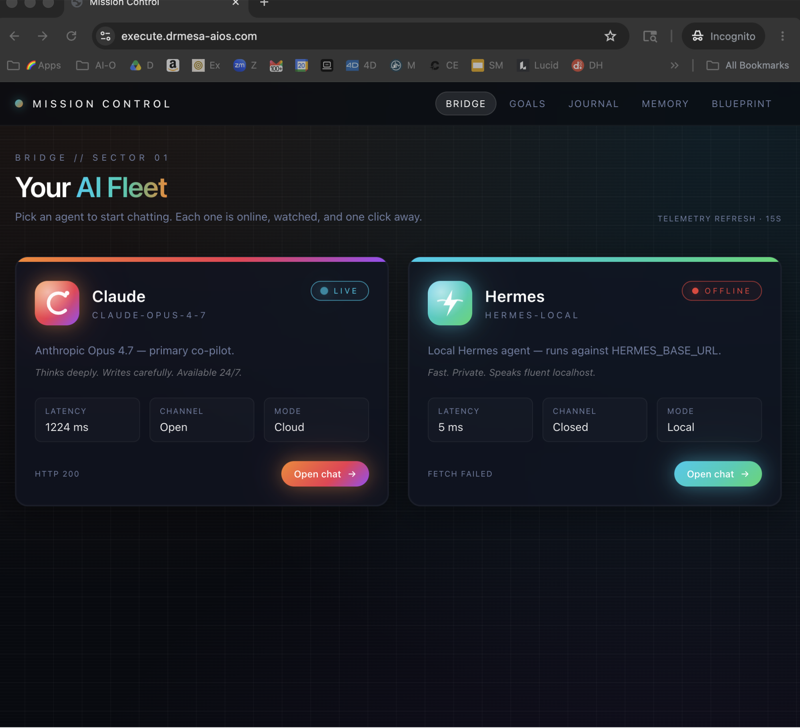
For the broader AI content automation context that frames this stack, the Hermes walkthrough below covers the agent layer.
What's In The Boardroom Avatar Process
The paid version inside the Boardroom adds five layers of depth on top of the public walkthroughs.
1 — Full HeyGen API setup video
Step-by-step including avatar ID and voice ID configuration, the bits that catch beginners every time.
2 — n8n workflow templates
Copy-paste import for research, script, render, and distribute flows. You skip the painful first build and start from a working baseline.
3 — Script writing agent prompt library
More than 20 tested prompts in my style, ready to drop into your own script agent so the output sounds right from day one.
4 — Distribution automation
Full Blow Auto configuration plus the edge cases that break in production — the ones nobody documents until they hit them.
5 — Roadmap for scaling
The path from a single avatar to multi-avatar, multi-niche, multi-channel content surface area. This is where the real money is.
Pricing For The Julian Goldie Avatar Stack
The cost is laughably low compared to what it replaces.
HeyGen runs about £19-49 a month, 11Labs is £4-22 a month, and n8n is free self-hosted or about £20 a month for the cloud version. Total stack cost lands at roughly £25-90 a month.
Compare that to a traditional content team at £2,000-5,000+ a month and the ratio explains why solo creators are the ones winning this category right now.
Why The Avatar Process Wins
There are three reasons this workflow beats manual content production for most creators.
The first is daily output. You can ship every day without recording every day, which is the only realistic way to maintain a daily cadence as a solo creator.
The second is multi-channel from one source. A single render becomes posts across ten channels, which means your reach scales without your time.
The third is compounding audience. Three hundred and sixty-five videos a year versus thirty to fifty produces exponential audience growth, not linear. Algorithms reward consistency more than effort.
Boardroom Member Wins
Real numbers from inside the community.
Member A
Avatar plus automation is producing £600 a day from short-form content. Solo, no team.
Member B
Three avatars across three different niches are combining to £15K a month. Each avatar runs independently with the same automation backbone.
Member C
An avatar-led course launch produced £40K in 30 days, driven primarily by daily avatar content building demand pre-launch.
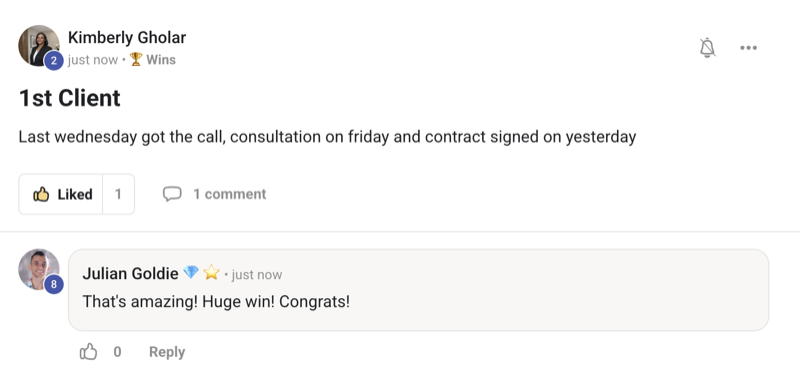
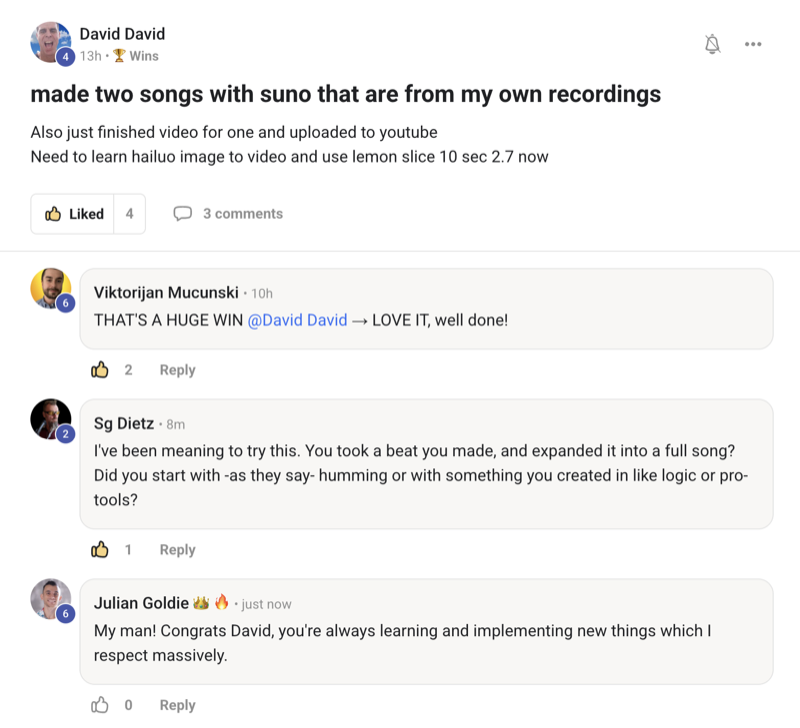
These are real outcomes from real members. The full process is what makes them work — and the full process is what the Boardroom delivers.
Common Avatar Process Mistakes
There are three mistakes I see avatar creators make repeatedly.
1 — Skipping the voice clone
Default HeyGen voices feel robotic and audiences pick up on it instantly. Always clone your real voice — it's a 15-minute job and it's the difference between performing well and underperforming.
2 — No script optimisation
Avatars handle some sentence structures better than others, and unoptimised scripts produce stilted delivery. The Boardroom prompt library solves this with tested patterns.
3 — Manual distribution
If you're publishing manually, you've defeated the entire point of the stack. Automate distribution from day one or you'll abandon the workflow inside a month.
Setting Up With Boardroom Guidance
The structured three-week ramp inside the Boardroom looks like this.
Week 1
Avatar and voice clone go live. You publish your first five videos manually so you understand the loop end-to-end.
Week 2
Research and script agents get wired. n8n is flowing and the content pipeline starts running.
Week 3
Distribution automation goes live and daily output starts shipping without you. By the end of week three, the content engine runs itself.
What Free Alternatives Don't Cover
There are three gaps that free walkthroughs consistently leave open.
1 — Edge cases
What do you do when the HeyGen API throttles? When n8n flow breaks at 3am? The Boardroom covers debugging because that's where most setups die.
2 — Scaling
Going from one video a day to five is a different problem than the initial build. The Boardroom roadmaps the scaling path so you don't hit walls you didn't see coming.
3 — Monetisation
Avatars are leverage, but leverage without monetisation is just busy work. The Boardroom shows you how to convert the leverage into real revenue.
The Boardroom Live Coaching Side
Weekly live calls are where the depth lands.
You bring your questions, I walk through your stack on a screen-share, and we debug, refine, and improve in real time. This is where the difference between a working setup and a great setup happens — and it's the part free content can't deliver.
🚀 Want hands-on avatar coaching? AI Profit Boardroom has weekly live coaching for avatar setups. → Join here
Common Member Questions
Five questions I get every week from people running this stack.
1 — Does the avatar look real?
In 2026, increasingly yes for short-form content. Always disclose AI use anyway — the trust dividend is worth more than the marginal extra clicks.
2 — Can I run multiple avatars?
Yes. Different niches and personas can each have their own avatar running in parallel.
3 — How big is the time saving?
Roughly 10x compared to manual recording for the same output volume. The savings compound the more you ship.
4 — Is HeyGen the best?
In 2026, yes — Synthesia and others are competing closely but HeyGen leads on quality and API maturity.
5 — Can I sell avatar setups?
Yes. Avatar setup engagements are pricing at £500-3,000 right now and demand is far higher than supply.
Quality Compared To Manual Recording
Honest comparison.
Manual recording delivers more natural micro-expressions, more variation in voice tone, and genuine spontaneity. It's still better for high-stakes intimate content like sales videos to a single prospect.
Avatar delivers consistency, availability, and scalability that manual can't match. It's better for daily content, top-of-funnel, and multi-channel distribution.
For most content types, avatar is sufficient. For the rare cases where it isn't, you can mix manual and avatar in the same content calendar.
Multi-Niche Avatar Strategy
This is the advanced play, and it's where the biggest wins live.
You start with one avatar — your face and voice for your main brand. You add a second avatar for an adjacent niche, with a different persona and a different content angle. You add a third as a test niche where you experiment with new formats.
Three avatars times daily content times five channels equals massive surface area, and that's the Boardroom advanced playbook in one sentence.
Pricing Strategy For Avatar Services
If you sell setups to clients, here's the three-tier ladder that works.
Tier 1 — Basic setup
£500-1,000 for HeyGen plus voice clone only. Entry-level engagement that proves the concept for the client.
Tier 2 — Full automation
£2,000-3,000 including n8n flows and distribution automation. This is where most clients land.
Tier 3 — Multi-niche scaled
£5,000-10,000 for multi-avatar, multi-channel scaled setup. This is the deep engagement that delivers lasting value.
The Boardroom shows you the sales process for each tier including scoping, pricing language, and delivery patterns.
ROI Math
For a typical creator running this stack, the numbers stack up like this.
Setup time is 1 to 2 weeks. Monthly cost is £25-90. Output is 5-10x manual. Audience growth is typically 3-5x what you'd see from the same effort manually.
Payback usually lands inside month one for anyone monetising their content even minimally.
FAQ — Julian Goldie Avatar Process
Is the full process really inside the Boardroom?
Yes — the complete HeyGen plus 11Labs plus n8n walkthrough with video, templates, and live coaching.
What tools do I need?
HeyGen, 11Labs, n8n, and a distribution tool like Blow Auto.
Cost?
£25-90 a month total stack cost.
Setup time?
1 to 3 hours of hands-on time spread across the first week.
Best avatar quality?
HeyGen leads in 2026, with Synthesia and others competing closely.
Do I need code?
For Boardroom-level depth, yes — basic n8n knowledge plus light scripting. The templates reduce the code requirement significantly.
Is it worth $69 a month for the Boardroom upgrade?
For anyone serious about avatar content, yes. ROI typically lands in week one of implementation.
Also On Our Network
- 🌐 Read on bestaiagentcommunity.com
- 🌐 Read on juliangoldieaiautomation.com
- 🌐 Read on aisuccesslabjuliangoldie.com
- 🌐 Read on aimoneylabjuliangoldie.com
Related Reading
- Hermes Agent Goals — autonomous content automation.
- AI Profit Boardroom Inside — community details.
- Julian Goldie Courses — the full course landscape.
📺 Video notes + links to the tools 👉
🎥 Learn how I make these videos 👉
🆓 Get a FREE AI Course + Community + 1,000 AI Agents 👉
The Julian Goldie avatar process is the most-leveraged content stack of 2026 — get the full process inside the Boardroom and ship daily by next week.