The Hermes agent goals feature changes the business case for AI agents in a way that's hard to overstate, and this post breaks down exactly how to deploy it for ROI in 2026. After running it across my own ops for the past few months, I'm convinced this is the upgrade that takes Hermes from "useful tool" to "core operations layer".
This is the business view of goals. I'll walk through what they unlock, the real use cases driving revenue and savings, and the actual ROI numbers I'm seeing across the Boardroom membership.
🔥 Want my Hermes goals 30-day roadmap? AI Profit Boardroom has the roadmap plus use case templates plus weekly coaching. → Get the roadmap
Why Hermes Agent Goals Matter For Business
There are three reasons goals are the single biggest business unlock in the Hermes feature set.
The first is that they eliminate micro-prompting. You set the goal once and Hermes runs it through to completion while you do other work. Your prompting time drops by an order of magnitude.
The second is multi-day project autonomy. You can set a goal Monday, walk away, come back Wednesday, and find Hermes has continued to make progress. The agent state persists across sessions in a way that single-shot prompts can't.
The third is the built-in completion judge. Hermes checks its own work for completion before declaring done, which dramatically reduces the "almost done" failure mode that plagues most autonomous agent setups.
Top Hermes Agent Goals Business Use Cases
Six use cases that consistently deliver ROI for business owners.
1 — Daily content production
/goal write 3 blog posts on [topic] + publish runs the entire content cycle from research to publish without you in the loop.
2 — Lead generation
/goal scrape 100 leads + enrich + add to CRM produces qualified pipeline daily without a human SDR touching it.
3 — Customer support audit
/goal review 100 tickets + categorise + draft template responses turns weeks of manual audit work into an overnight job.
4 — Competitor analysis
/goal research 10 competitors + summarise gives you actionable competitive intel before your morning coffee.
5 — Code refactor
/goal modernise this codebase chips away at technical debt while you focus on shipping new features.
6 — Data analysis
/goal analyse Q1 sales + produce report produces the kind of analysis that used to take an analyst a week.
For each, a single command kicks off long-running work that would otherwise eat days of human time.
Watch The Update
For broader Hermes context that frames how goals fit the wider agent layer, the walkthrough below is the canonical reference.
Real Business ROI
Real numbers from members and from my own work.
Founder
A daily content goal saving 3 hours a day, which translates to roughly £600 a week of billable upside reclaimed.
Agency
Goal-driven research per client saving 5 hours a week per client, which adds up to about £2K a month upside per client account.
SaaS team
Goal-driven bug squash work compressing days into hours, saving roughly £10K a month in dev time across the team.
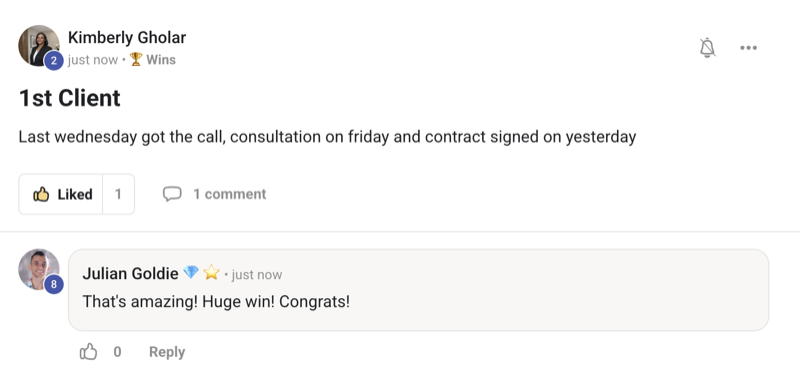
These are real outcomes from operators inside the Boardroom, not hypothetical projections.
Setup In Plain English
Three steps to get to your first goal.
Step 1 — Update Hermes
Run hermes update to pull the latest version with goals enabled.
Step 2 — Run a small first goal
Pick something small — a 5-turn task — to build muscle and prove the loop works end-to-end without risking a real workload.
Step 3 — Production goal
Move to a real piece of work that delivers measurable business value. By the third goal, you're already integrated into your daily ops.
Goals + Memory + Multi-Agent
Goals stack with the other Hermes capabilities to form a complete autonomous ops layer.
Goals = persistence
The work itself, scoped and persisted across sessions.
Memory = context
What's been done before, who said what, and what was decided. See OpenClaw Memory Persistence for related concepts.
Multi-agent = scale
A manager goal coordinates worker agents across parallel streams. See Hermes Agent Swarm for the multi-agent layer.
Together, the three give you full ops automation rather than a clever tool.
Pricing
Hermes itself is free and open source. The only costs are LLM API tokens.
Light use lands around £20-50 a month. Medium use is £100-300. Heavy enterprise use crosses £500 a month and keeps climbing with volume.
For local Ollama deployments the cost drops to £0, with the trade-off of slower throughput and slightly weaker reasoning on the cheaper local models.
Time Saved Math
For a typical business owner running this stack daily, the maths breaks down like this.
You set 1-2 goals a day, each saving 1-3 hours of human time. Daily total is 2-6 hours. Weekly total is 10-30 hours. Monthly total lands at 40-120 hours of reclaimed time.
At a £100/hour effective rate, that's £4K-12K a month of upside from a tool that costs at most a few hundred pounds in tokens.
Common Business Mistakes
There are three mistakes business operators make repeatedly with goals.
1 — Vague goals
Specific goals produce specific outputs. "Write some blog posts" produces mush; "Write 3 blog posts on [specific topic] targeting [specific audience] and publish to WordPress" produces shippable work.
2 — Skipping QA
Always review goal output before it ships, especially for client-facing work. Goals are reliable but not infallible.
3 — Ignoring the turn budget
Adjust the turn budget for big goals or they'll terminate prematurely. The default is fine for small tasks and wrong for large ones.
What Goals Won't Do
Be honest with yourself about the limits.
1 — They won't replace strategic thinking
You still decide direction. Goals execute against the direction you set.
2 — They won't replace human relationships
Sales calls, client trust, partnership development — those are still you, not the agent.
3 — They won't replace creative judgement
Goals execute against creative direction, but they don't generate the creative direction itself.
Boardroom Goals Roadmap
The structured 30-day roadmap inside the Boardroom looks like this.
Days 1-7
Setup plus your first three goals shipped end-to-end.
Days 8-14
Mid-tier goals plus introduction to multi-agent coordination.
Days 15-21
Memory integration and scaling patterns.
Days 22-30
Productisation and monetisation patterns for selling goal-driven workflows to clients.
By day 30, goals are core to your operations rather than an experiment.
Productising Goals For Clients
If you run an agency, here's the three-tier offering ladder.
Service 1 — Goals setup
£1,500-3,000 per engagement to set up goals for client workflows end-to-end.
Service 2 — Custom goal templates
£500-2,000 for bespoke goal templates tuned to client-specific use cases.
Service 3 — Goals retainer
£500-1,500 a month per client for ongoing operation, monitoring, and iteration.
Three offerings, real revenue, and a clean ladder for client growth.
Common Member Wins
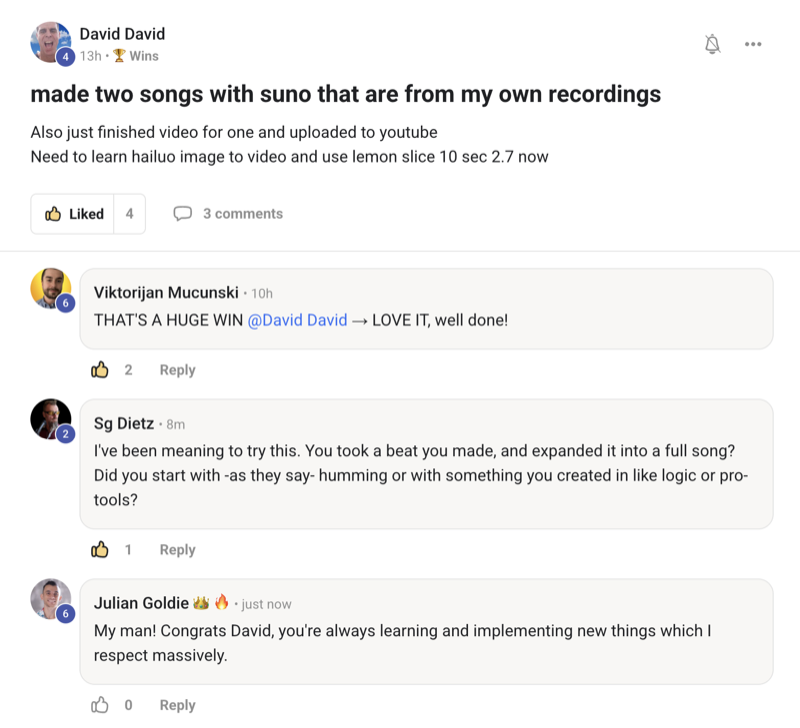
Three wins from inside the community worth highlighting.
Win 1 — Saved 30 hours a week
A solo founder replaced manual research with goals and reclaimed roughly 30 hours of weekly time.
Win 2 — £15K cohort delivered via goals
A coach delivered an entire £15K cohort using goal-driven content and delivery flows.
Win 3 — Agency with 10 clients on goals retainer
An agency stacked 10 clients onto a goals retainer model for £15K a month of recurring revenue.
🚀 Want hands-on goals coaching? AI Profit Boardroom has weekly live coaching for goals deployment. → Join here
When Goals Fit Best
Match the tool to the use case.
Best fit is multi-step open-ended work, multi-day projects, and production-grade tasks that need reliable completion. Less good fit is real-time interaction work and highly creative single-shot generation. Goals are an ops tool — use them where ops matters.
Migration From Manual Prompting
A simple two-week ramp gets you from manual prompting to goals-first operation.
Week 1
Replace 1-2 of your daily manual tasks with goals.
Week 2
Expand to 3-5 daily goals and remove the corresponding manual work from your calendar.
By week two, you'd never go back to manual prompting for repeated tasks.
Reliability At Scale
For business-critical use, build in the reliability patterns that production demands.
Add retry on judge failure, configure a fallback model for when the primary is rate-limited, monitor turn budget consumption to catch runaway goals, and audit your skills periodically to remove drift.
Privacy Considerations
Local Ollama deployments give you full privacy. Cloud LLMs are subject to provider policies, which is fine for most business work but matters for genuinely sensitive workloads. For the latter, run local-only.
FAQ — Hermes Agent Goals For Business
Best first business goal?
Daily content or research. Both deliver fast and obvious ROI.
Realistic ROI?
5-50x for knowledge businesses depending on how much of your work is automatable.
Setup time?
90 minutes to your first production goal.
Cost?
£0-£500 a month depending on volume.
Need technical skills?
Light terminal use is enough for most workflows.
Best paired feature?
Memory plus multi-agent. The three together form the full ops stack.
Worth Boardroom upgrade?
For business-serious users, yes.
Also On Our Network
- 🌐 Read on bestaiagentcommunity.com
- 🌐 Read on juliangoldieaiautomation.com
- 🌐 Read on aisuccesslabjuliangoldie.com
- 🌐 Read on aimoneylabjuliangoldie.com
Related Reading
- Hermes AI Agent Framework 2026 — Hermes basics.
- Hermes Agent Swarm — the multi-agent layer.
- Sonnet 4.8 Review — the best judge model for production goals.
📺 Video notes + links to the tools 👉
🎥 Learn how I make these videos 👉
🆓 Get a FREE AI Course + Community + 1,000 AI Agents 👉
Hermes agent goals is the leverage feature of 2026 — deploy this week and watch your business compound.