Agentic os claude code is what happens when you stop treating Claude Code as a chat tool and start using it as the actual build engine of a personal operating system.
I've spent the last six months wiring Claude Code into a full Agentic OS and the leverage is genuinely silly.
This post breaks down how it actually works under the hood — the layers, the routing, the build loop, and the prompts that turn the whole thing into a shipping machine.
If you've been reading about Agentic OS without quite understanding where Claude Code fits, this is the article that connects the dots.
Want the build-layer playbook I run inside the AI Profit Boardroom? Inside the AI Profit Boardroom I share my exact Claude Code prompts, the Agentic OS dashboard setup, and weekly live builds with 3,000+ members. Join the Boardroom
What The Build Layer Of An Agentic OS Actually Does
The build layer is the part of your Agentic OS that takes a brief and turns it into shipped artefacts.
It's the agent that writes code, refactors files, runs tests, installs packages, and deploys the output.
Every other layer in the OS feeds into or out of it.
The intelligence layer reasons about what to build.
The research layer gathers context.
The execution layer interacts with browsers and external apps.
The memory layer remembers what you've done.
The build layer is the one that ships.
And Claude Code is the agent doing that shipping in my stack.
If you're new to the concept, my agentic os deep dive covers what an Agentic OS is from first principles.
Why Claude Code Won The Build-Layer Slot
There are a few coding agents that can technically run the build-layer role.
Cursor, Cline, Aider, OpenCode, and Claude Code are the main contenders.
I tried all of them across real production work.
Claude Code won for four specific reasons.
The first reason is the CLI-first architecture.
It treats your whole project directory as the context.
It can open files, edit them, run shell commands, install dependencies, and verify the result in one continuous loop.
The second reason is the multi-file refactor quality.
When I ask Claude Code to refactor a database schema across fifteen files, it actually does it without breaking imports.
That sounds basic and yet most agents fail at it.
The third reason is the test loop.
Claude Code writes the code, runs the tests, sees the failures, and fixes them automatically.
That tight loop is what separates a build engine from a fancy autocomplete.
The fourth reason is the cost.
Claude Code on Pro is roughly £15 a month for unlimited use compared to Cursor's £20 seat.
Cheaper, more capable, ships more code per session.
The choice was easy after a week of side-by-side testing.
The 4-Layer Goldie Mission Stack — Where Claude Code Sits
I call my Agentic OS the Goldie Mission Stack.
It has four named layers and Claude Code is wired into the intelligence-plus-execution slot.
Layer one is intelligence — Claude Desktop plus Claude Code.
Claude Desktop handles the planning and clarifying questions.
Claude Code handles the actual file generation and shell execution.
Layer two is execution — OpenClaw for browser automation.
OpenClaw clicks, types, scrolls, and scrapes real websites on demand.
Layer three is research — Hermes Agent for multi-step research workflows.
Hermes pulls in documentation, summarises competitor data, and feeds findings to Claude.
Layer four is self — Obsidian plus OMI for memory.
Every session writes to Obsidian.
Every personal context fact lives in OMI.
The OS dashboard sits on top of all four layers and orchestrates the routing.
That's the architecture and Claude Code is the one doing the actual building.
If you want the visual breakdown, my agentic os command center post shows the dashboard with annotated screenshots.
The Exact Prompt Loop For A Build Session
Here's the literal sequence of prompts I run on a new feature.
Step one is the brief in Claude Desktop.
I open a fresh chat and say something like "I want to build a dashboard that pulls live Google Search Console data and shows me my top ranking keywords with a delta column."
Claude Desktop responds with three or four clarifying questions — which framework, which auth, which database.
Step two is the spec.
After I answer the questions, Claude Desktop generates a detailed spec.
Step three is the handoff to Claude Code.
I copy the spec into a Claude Code session inside my project directory.
I prompt with "Build this spec. Use Next.js, TypeScript, and Tailwind. Run the tests as you go. Stop and ask if you hit a blocker."
Step four is the build.
Claude Code spins up the file tree, writes the routes, the components, the database adapter, and the tests.
I watch the terminal as it works.
It takes about forty minutes to land the first working version.
Step five is the iteration loop.
I open the local dev server, find what's wrong, and feed the issues back to Claude Code one at a time.
Each iteration takes two to five minutes.
Step six is the deploy.
I tell Claude Code to deploy to Netlify or Vercel.
It runs the deploy command, confirms the build, and gives me the live URL.
End to end, ninety minutes for a real production feature.
That's the loop and it's why I never go back to manual coding.
For the full Claude-Desktop-first kickoff, the agentic os claude walkthrough has the prompt scripts I use.
What Makes The Build Layer Actually Fast
A lot of builders watch the workflow and assume it must be tool magic.
It isn't.
Here's what actually makes it fast.
The first speed lever is the brief.
A clean spec from Claude Desktop means Claude Code doesn't waste tokens guessing.
The second speed lever is the project memory.
Obsidian holds every previous session.
When I start a new build, Claude Code can read previous patterns and reuse them.
The third speed lever is the test loop.
Claude Code runs tests automatically.
I don't have to babysit it.
The fourth speed lever is the dashboard.
I review changes in the Agentic OS dashboard instead of digging through diffs in a terminal.
That's a five-minute review instead of a fifty-minute one.
The fifth speed lever is parallel agents.
While Claude Code is building, Hermes is researching the next feature and OpenClaw is verifying the live deploy.
Three agents working in parallel instead of one human switching contexts.
That's the real unlock — parallel execution, not faster typing.
Free $0 Build Layer — Yes, Genuinely
You can run the entire build layer for £0 if you want to.
Claude Desktop has a free tier that handles roughly five briefs a day before rate limits hit.
Claude Code can be used via the Anthropic API with a small balance — top up £5 and it lasts a week of moderate use.
Hermes Agent is fully open source — clone, install, run, free forever.
OpenClaw is open source — same deal.
Obsidian is free for personal use.
OMI is free for the basic memory layer.
If you want a free fallback model for non-Anthropic tasks, OpenRouter's Step 3.5 Flash is free for low-volume use.
That gives you a complete build-layer stack at zero cost.
The paid version costs me £20 a month total — that's Claude Pro plus a top-up for OpenRouter — and ships about three times more code than the free tier.
For the install order and exact tools, the agentic os download post is the cheat sheet.
The No Flicker Mode Trick For Long Build Sessions
The build layer benefits from a recent Claude Code update most people missed.
Anthropic shipped no flicker mode which keeps Claude Code's memory flat regardless of session length.
Before this update, a six-hour build session would gradually slow my MacBook to a crawl.
The terminal would flicker, redraws would lag, and eventually the session would crash.
With no flicker mode enabled, memory stays flat at hour six the same as at minute six.
It also adds mouse support — you can click directly on tool outputs to expand them.
That's huge for reviewing what Claude Code did across a long Agentic OS build.
The setup is one environment variable and the full walkthrough is in my claude code no flicker mode breakdown.
If you're running Agentic OS Claude Code daily, enable no flicker mode tonight.
Where The Build Layer Hands Off To Other Agents
The build layer isn't doing everything.
It hands off cleanly to the other layers when the task isn't about writing code.
When the brief involves browser automation — like "scrape my top ten competitors' pricing pages" — Claude Code hands off to OpenClaw.
When the brief involves multi-step research — like "summarise the top twenty articles ranking for X" — Claude Code hands off to Hermes.
When the brief involves checking my personal context — like "what did I decide about pricing last week?" — Claude Code hands off to OMI.
The dashboard handles the routing automatically.
I don't manually copy data between agents.
That orchestration is what makes the Agentic OS feel like one tool instead of five.
The agent-os-claude breakdown shows the routing diagram in detail.
Why The Build Layer Compounds Over Time
The build layer gets better the longer you use it.
That's because Obsidian remembers every session.
The first time I built a dashboard, it took ninety minutes.
The second time, Claude Code reused patterns from the first build and it took forty minutes.
The fifth time, it was twenty minutes because the memory layer had the full template.
By the tenth dashboard I'd built, Claude Code was generating the whole thing in under fifteen minutes including tests.
That compounding effect is why I keep saying this is the highest-leverage dev workflow of 2026.
You're not just shipping faster today.
You're investing in a build layer that gets faster every week.
If you want the strategic case for why this matters at a business level, my agentic os meaning post explains it in plain English.
Common Mistakes Builders Make With The Build Layer
The most common mistake is treating Claude Code as a chat replacement.
It isn't.
Chat replacements are great for one-off questions but terrible for multi-step builds.
The fix is to always brief properly in Claude Desktop first.
The second common mistake is skipping the memory layer.
Without Obsidian wired in, every session starts fresh.
That kills the compounding effect.
Spend twenty minutes setting up the vault on day one.
The third common mistake is fighting the agents.
If Claude Code suggests a different approach than what you asked for, listen first.
It's seen patterns across millions of codebases.
Push back when the approach is genuinely wrong but don't fight it on style preferences.
The fourth common mistake is running too many parallel agents on a weak machine.
If you're on a base-spec laptop, run Hermes locally and Claude Code via API instead of trying to host everything locally.
The deepseek harness post has the lightweight alternative for travel days.
Real Numbers From My Build Layer
To make the leverage concrete, here are real numbers from last week.
Build one — a competitor SEO dashboard with live data, three database tables, four pages — total time ninety minutes.
Build two — a YouTube thumbnail A/B tester with image upload — total time sixty minutes.
Build three — a Stripe-integrated paywall for a content site — total time seventy-five minutes.
Build four — a Twitter monitoring bot with sentiment analysis — total time forty-five minutes.
Build five — a meeting summariser that pulls from Zoom recordings — total time one hundred and twenty minutes.
That's five real production features in one work week.
Total time invested — about six hours.
Total time the same work would have taken six months ago — about thirty hours.
Five times the throughput from one operator.
That's what Agentic OS Claude Code does to your weekly output.
Trust Signals For The Workflow
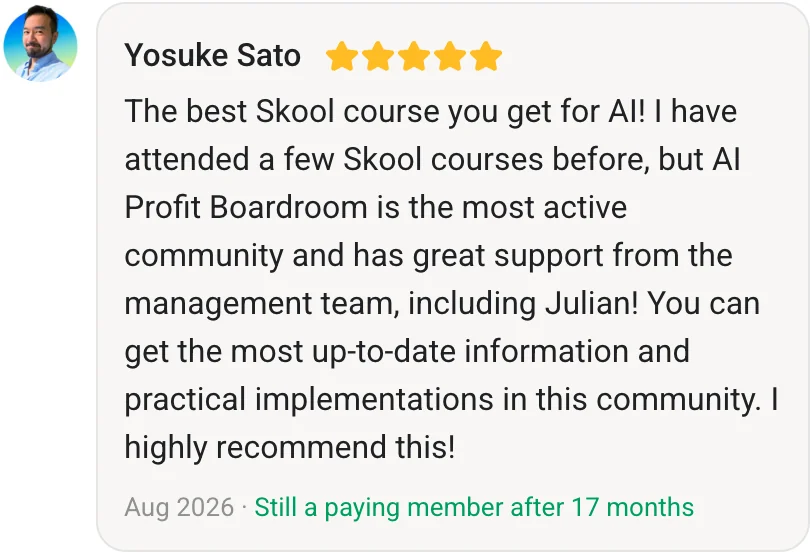
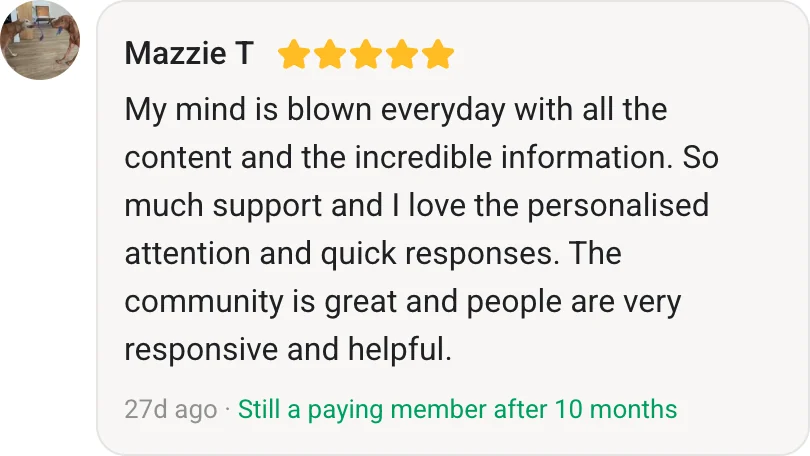
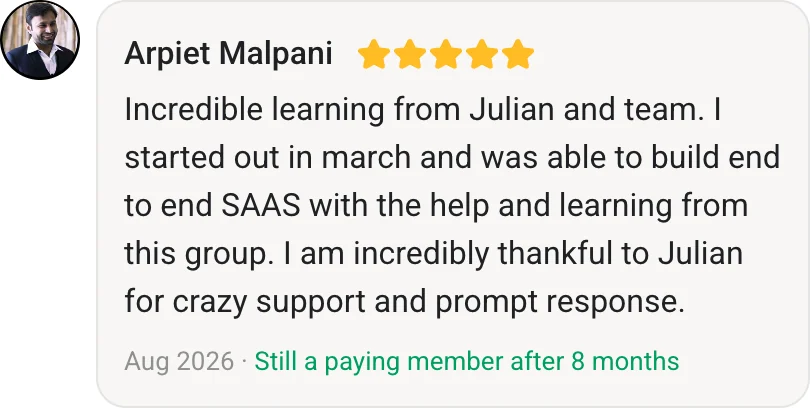
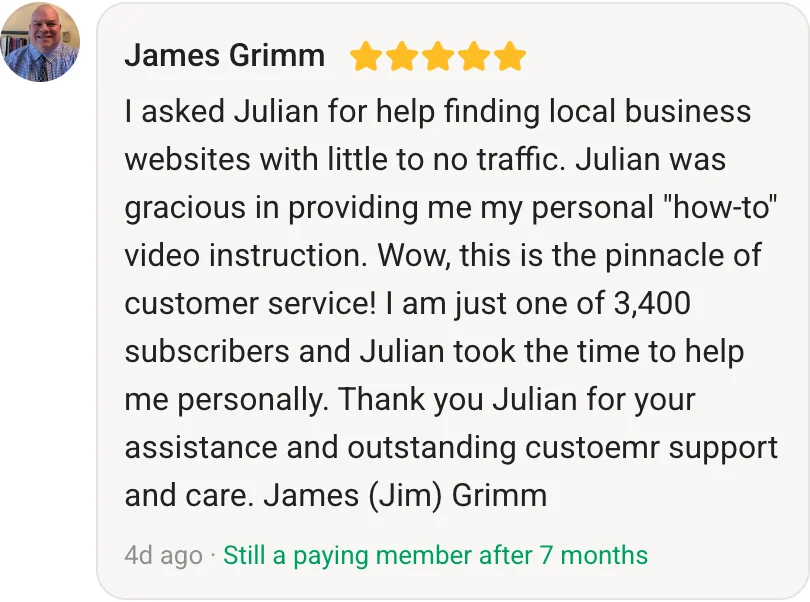
The AI Profit Boardroom has 3,000+ members running variations of this exact workflow.
We run five live calls every single week including a dedicated AI build call.
The price is locked at $69 a month forever and backed by a twin guarantee — if you don't ship something real in 30 days, I refund you and you keep all the training.
That's how confident I am that this workflow ships results.
Want a free way to test the workflow first? Join my AI Money Lab — a free community where I share lighter versions of these workflows and 1,000+ free AI agents.
When To Stop DIY-ing And Hire It Out
The Agentic OS Claude Code workflow scales an individual operator dramatically.
There's still a ceiling.
If you're running a real agency and need ten of these workflows running in parallel for clients, you're past the point of doing it yourself.
That's when you bring in a team.
The Goldie Agency runs this exact stack for SEO and AI clients.
Are you an agency? Need SEO + AI automation built for you? Book a free strategy session with my 7-figure SEO agency Goldie Agency. Book free session
FAQ — Agentic OS Claude Code Build Layer
What does Claude Code do inside an Agentic OS?
Claude Code is the build layer — it writes code, runs tests, installs dependencies, and deploys output. Other agents handle research, browser work, and memory while Claude Code handles the actual shipping.
Do I need Claude Pro to run Agentic OS Claude Code?
No — you can run it via the Anthropic API on a £5 top-up balance. Claude Pro gives you better rate limits and is worth it once you're using the stack daily.
How does Claude Code know what previous sessions did?
Through the memory layer — Obsidian holds session summaries that Claude Code reads at the start of each new session. That's how the workflow compounds over time.
Can the build layer handle production deployments?
Yes — Claude Code runs the deploy command directly to Netlify, Vercel, or any provider with a CLI. I deploy production features through it weekly.
What's the difference between Cursor and Claude Code for the build layer?
Cursor is IDE-first and great for editing one file at a time. Claude Code is CLI-first and built for multi-file refactors and full project automation, which is why it wins as the build layer.
How do I keep build sessions from crashing my laptop?
Enable Claude Code no flicker mode with one environment variable. It keeps memory flat regardless of session length and stops the terminal from chewing through RAM.
About Julian
I'm Julian Goldie — AI entrepreneur, SEO expert, and founder of the AI Profit Boardroom (3,000+ members). I help business owners scale with AI agents, automation, and SEO.
- 400K+ YouTube subscribers
- 7-figure AI agency (Goldie Agency)
- Daily training inside the Boardroom
- Author of multiple AI automation playbooks
Get my best AI training inside the AI Profit Boardroom
Latest Updates
- Agentic OS — the operator stack overview.
- Agentic OS Claude — the Claude Desktop kickoff prompts.
- Agentic OS Download — install + first build setup.
Further Reading On Agent OS Guide
For deeper walkthroughs on the topics in this article, the Agent OS Guide library has these worth bookmarking.
- Agent OS Guide — the full library of agent OS walkthroughs and setups.
- How Claude Mythos Changed AI — context on why Claude sits at the centre of most agent OS stacks.
- Free Claude Code Setup Guide — the elegant, free setup most Claude-based builds start from.
- Hermes Agent OS Q&A — answers the questions you'll hit when comparing Claude-only and Hermes-style builds.
Also On Our Network
- Read on bestaiagentcommunity.com
- Read on juliangoldieaiautomation.com
- Read on aisuccesslabjuliangoldie.com
- Read on aimoneylabjuliangoldie.com
Related Reading
- Agentic OS Meaning — the business-level case for the OS layer.
- Agentic OS Command Center — the dashboard side of the stack.
- Agent OS Claude — the orchestration and routing diagram.
- Claude Code No Flicker Mode — the env var that makes long builds liveable.
- DeepSeek Harness — the lighter alternative for low-spec hardware.
Video notes + links to the tools
Get a FREE AI Course + Community + 1,000 AI Agents
If you build software for a living in 2026, agentic os claude code is the single highest-leverage dev workflow you can adopt this quarter.