Agentic OS Claude is the question everyone keeps asking me about right now, and the real question hidden inside it is simpler than it looks.
The question is: why Claude, and not one of the dozen other frontier models?
I've now tested every serious option in the central seat of an Agentic OS, and the answer is clear enough that I'm willing to stake my agency on it.
This post is the long-form argument for why Claude earns the brain seat, what the four traits are that matter, and how I wire Claude into a real Agentic OS on my own machine.
Want the Agentic OS Claude build pack I use? Inside the AI Profit Boardroom, I share the exact prompt, the layout files, and the wiring SOPs. Five weekly calls, 3,000+ members, $69/mo locked with the twin guarantee. Get access here
Why The Brain Choice Matters More Than Anything Else
The brain of your Agentic OS sets the ceiling on everything else.
You can have the most beautiful dashboard in the world and the best downstream agents in the world, but if the brain reasoning is shallow, the whole system stalls.
Every other layer reports up into the brain and waits for instructions.
Every action is decided by the brain, every plan is drafted by the brain, every downstream call is dispatched by the brain.
That means a wrong brain choice gets amplified through every single layer below it.
A right brain choice gets amplified the same way in the opposite direction — better decisions cascade into better results.
So if you're going to spend an hour building your Agentic OS, spend ten seconds picking the brain that actually deserves to sit there.
For me, that brain is Claude.
The wider context for why an Agentic OS exists at all sits in my agentic OS post.
The Four Brain Traits Your Agentic OS Demands
I've broken this down into four specific traits because vague claims about "Claude is the best" don't help anyone wire a real system.
These are the four traits the brain has to nail.
Trait one — multi-step reasoning that doesn't lose the thread.
An Agentic OS spends most of its time chaining decisions across multiple agents.
Plan a research run, hand it to Hermes, wait for the result, integrate it into a plan, push the next step to OpenClaw, wait again, log everything.
If the brain forgets what it was doing two steps ago, the entire OS becomes useless.
Claude handles long reasoning chains better than anything else I've put in that seat.
Trait two — native tool use and MCP support.
The brain needs to actually drive downstream agents through proper protocols, not by stitching together brittle prompt hacks.
Claude has native MCP support, native tool use, and a tool-calling format that's reliable enough to lean on in production.
When the OS asks Claude "open this file, read it, summarise it into the vault", it does the three steps cleanly in sequence.
Trait three — code generation good enough to build the OS itself.
This is the trait that surprises people the most.
Your Agentic OS isn't a thing you buy — it's a thing the brain builds for you from a single prompt.
If the brain ships broken Next.js or hallucinated imports, you're not getting an OS, you're getting a project that wastes your afternoon.
Claude generates production-grade code reliably enough that I trust it to scaffold an entire dashboard in one session.
Trait four — long context for vault-backed memory.
The brain has to hold the system prompt, the vault context, the live agent status, and the current task in working memory at the same time.
That requires a context window long enough that you don't have to constantly truncate the vault before every call.
Claude's context handling is currently the longest and the most coherent in the field.
For a direct compare with the older naming convention, see my agent OS Claude write-up.
The Models I Tested Before Settling On Claude
I'm not anti any specific model — I'm pro whatever wins on the four traits.
When I ran my own bake-off, here's what each contender struggled with.
GPT-class models were strong on reasoning but the tool-calling reliability dropped off in long chains.
Open-source local models were great for cost but couldn't hold the multi-agent plan together for more than a few steps.
Smaller fast models were fine for the downstream Hermes role but couldn't drive the OS as the brain.
Claude was the only one that nailed all four traits in the same package, in the same session, without giving up halfway through.
That's why Claude sits in the central seat now and isn't moving any time soon.
What An Agentic OS Claude Setup Looks Like In Practice
Here's the concrete picture so you can see what we're actually building.
You open the dashboard in your browser and it shows you four panels at once.
The top-left is the Intelligence panel where Claude lives and you chat with it.
The bottom-left is the Execution panel where OpenClaw runs browser tasks Claude has dispatched.
The top-right is the Research panel where Hermes runs long lookups Claude has spawned.
The bottom-right is the Self panel that shows the Obsidian vault and recent OMI captures.
You give Claude a goal in the Intelligence panel, Claude decides what needs to happen, and then the other three panels light up as work moves through them.
There's no separate app to open, no separate terminal to babysit, no separate browser tab to manage.
One window, one brain, three downstream layers.
The Exact Prompt That Built My Agentic OS Claude
This is the prompt I dropped into Claude Desktop to build the whole thing.
I want you to see it verbatim because the exact wording is half the trick.
Create a beautiful operating system hosted locally for managing
Claude for a website connected to Claude. Should be like a beautiful
mission control dashboard. Then allow me to control my OpenClaw, my
Hermes, and any other agents in separate systems inside the dashboard.
Claude came back with a short list of clarifying questions — framework, panel layout, styling, deployment.
I confirmed Next.js plus Tailwind, four panels, and local hosting.
Then I let it run.
Inside an hour I had a working dashboard with a real backend, real panels, and a working Claude bridge.
Notice that the prompt doesn't specify the tech stack — Claude picked sensibly because that's what a real brain does.
For the build-along version with screenshots, my agentic OS Claude Code post breaks down the file structure step-by-step.
The Claude CLI Bridge — The Bit Nobody Talks About
The Claude CLI bridge is the unsung hero of the whole architecture.
Without it, the Intelligence panel is just a fancy chat window with a backend you'll never use properly.
With it, the Intelligence panel becomes a real command surface for Claude with full system access.
The way it works on my machine is straightforward.
The Next.js backend spawns a Claude CLI subprocess when you submit a prompt.
The subprocess inherits my filesystem permissions, my MCP configurations, and my environment variables.
Claude can read files, edit code, run scripts, hit APIs, deploy projects, and orchestrate downstream agents — all from the dashboard prompt I just sent.
That's the bridge.
It's three hundred lines of code total but it changes what the OS can do.
Where Claude Code Fits Inside The OS
Claude Code deserves its own panel because the two surfaces are good at different things.
Claude Desktop is the conversational seat — short turns, planning, dispatching.
Claude Code is the workshop — long sessions, multi-file edits, real engineering work.
Inside the Agentic OS I have a Claude Code launcher that opens a session inside whichever project folder I select.
It passes in the env vars, prepares the working directory, and streams the Claude Code output back into a panel.
That lets me sit in the Intelligence panel asking Claude what we should ship, watching Hermes research the topic in the Research panel, and then dispatching Claude Code to actually write the post into the repo — all from the same window.
I cover the daily-driving version of this routine in my agentic OS command center post.
The Goldie Mission Stack — Claude In The Centre
The Goldie Mission Stack is the name I gave the four-layer architecture once I had it working.
It's the same stack I've been describing throughout this post, with each layer playing a specific role.
Layer 1 — Intelligence (Claude + Claude Code).
The brain — plans, decisions, code, dispatch.
Layer 2 — Execution (OpenClaw).
The hands — browser tasks, clicks, scrapes, screenshots.
Layer 3 — Research (Hermes).
The legwork — long lookups, multi-step tool chains, deep investigations.
Layer 4 — Self (Obsidian + OMI).
The memory — vault logs, voice notes, continuity between sessions.
Claude is the only layer that can occupy the centre because of the four brain traits.
The other layers are interchangeable — you could swap OpenClaw for another browser agent or Hermes for another research agent.
But the brain seat belongs to Claude until something genuinely better shows up, and as of 2026 nothing has.
The Claude + Hermes pairing in detail lives in my Claude + Hermes agent post.
Real Tasks Claude Handles Inside My OS
I want to make this concrete with the actual tasks Claude handles for me on a working day.
Claude reads the overnight Hermes reports in the vault and summarises what's worth my attention.
Claude takes my "ship a post on X today" request and turns it into a plan with five steps.
Claude dispatches Hermes to gather the SERP data for the topic.
Claude opens a Claude Code session in my Eleventy blog repo and writes the post directly into the file tree.
Claude tells OpenClaw to deploy the build to Netlify and verify the URL.
Claude logs the entire chain into the Obsidian vault so tomorrow morning the next session knows what happened.
That's a normal Tuesday for me now, and it's possible because Claude has the four brain traits.
If Claude lost its grip on the multi-step plan halfway through, the chain would break.
It hasn't yet.
How To Get Started With Agentic OS Claude
If you want to build this yourself, the order of operations is short.
Install Claude Desktop and connect the MCPs you want Claude to be able to control.
Drop my prompt above into a fresh chat with Claude Desktop.
Answer Claude's clarifying questions with sensible defaults.
Let Claude scaffold the project end-to-end.
Wire in the Claude CLI bridge so the Intelligence panel has real tool access.
Add OpenClaw and Hermes endpoints to the Execution and Research panels.
Point the Self panel at your Obsidian vault.
You'll have a working Agentic OS Claude setup in roughly an hour.
The full guide for downloading and customising the build lives in my agentic OS download post.
If you want context on the wider category, my agentic OS meaning post explains what the term actually denotes and why it matters.
Why The Brain Decision Compounds
This is the part I want to leave you with.
The brain choice is the single highest-leverage decision in the whole Agentic OS.
A better brain means better plans.
Better plans mean better downstream calls.
Better downstream calls mean better research and better browser execution.
Better research and execution mean better logged outputs in the vault.
Better logged outputs mean tomorrow's brain starts from a smarter context.
That's the compounding loop, and it only spins up properly when the brain at the centre can actually hold the four traits together.
Claude is the brain that lets that loop run.
Everything I've shipped in 2026 traces back to that decision.
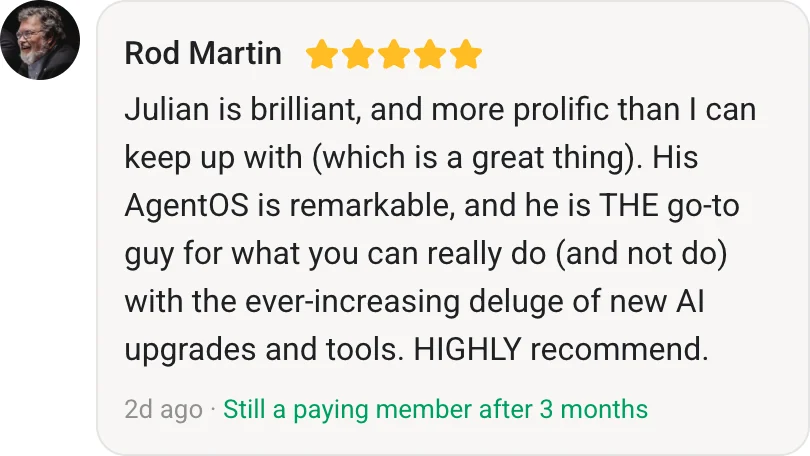
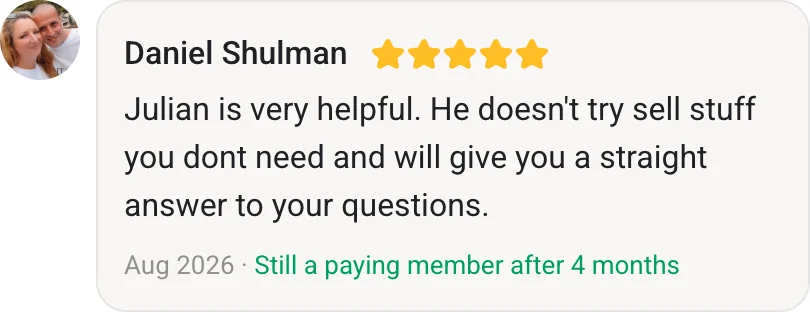
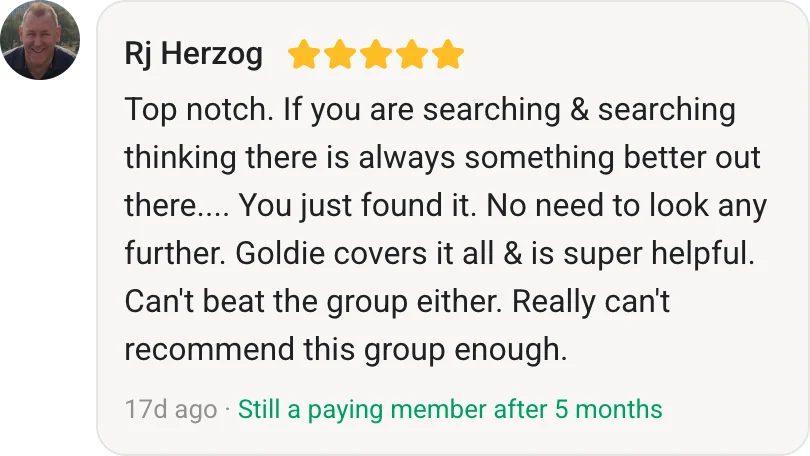
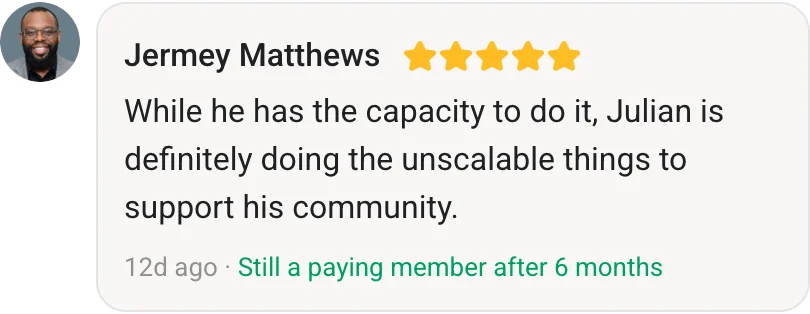
Watch How It Runs Inside The AI Profit Boardroom
Before you go, here's a quick look at the community where I share this whole setup.
Five weekly calls, 3,000+ members, $69/mo locked with the twin guarantee.
That's the room where the Agentic OS Claude builds happen live.
FAQ — Agentic OS Claude
Why is Claude the best brain for an Agentic OS?
Claude wins on the four traits an OS brain needs — multi-step reasoning, native tool use, reliable code generation, and long context — all in the same model family.
Can I use a different model as the brain of my Agentic OS?
You can, but every other model I've tested drops at least one of the four traits, and the brain weakness cascades through every downstream layer of the OS.
Does Agentic OS Claude need internet access to work?
The dashboard runs locally, but Claude itself reaches the cloud unless you swap in Claude Code with a local provider, in which case the OS can stay offline for most tasks.
How long does it take Claude to build the Agentic OS itself?
About an hour from prompt to working dashboard if you have Claude Desktop installed with the right MCPs connected and you answer its clarifying questions promptly.
Can the same Agentic OS Claude setup drive multiple agents at once?
Yes, that's the entire point — Claude dispatches OpenClaw and Hermes in parallel and the dashboard shows live status across all panels.
Where can I see Julian's full Agentic OS Claude build?
The full build is shared inside the AI Profit Boardroom with five weekly calls and 3,000+ members at $69/mo locked.
About Julian
I'm Julian Goldie — AI entrepreneur, SEO expert, and founder of the AI Profit Boardroom (3,000+ members at $69/mo locked with twin guarantee).
I run Goldie Agency, host five weekly coaching calls inside the Boardroom, and have authored multiple books on SEO and AI automation.
- 7-figure AI agency (Goldie Agency)
- Five weekly coaching calls inside the Boardroom
- Author of "SEO Link Building Mastery" and "Agency Marketing Mastery"
- 50,000+ Udemy students across long-running courses
→ Get my best AI training inside the AI Profit Boardroom
Further Reading On Agent OS Guide
For deeper walkthroughs on the topics in this article, the Agent OS Guide library has these worth bookmarking.
- Agent OS Guide — the full library of agent OS walkthroughs and setups.
- How Claude Mythos Changed AI — context on why Claude sits at the centre of most agent OS stacks.
- Free Claude Code Setup Guide — the elegant, free setup most Claude-based builds start from.
- Hermes Agent OS Q&A — answers the questions you'll hit when comparing Claude-only and Hermes-style builds.
Also On Our Network
- Read on bestaiagentcommunity.com
- Read on juliangoldieaiautomation.com
- Read on aisuccesslabjuliangoldie.com
- Read on aimoneylabjuliangoldie.com
Related Reading
- Agentic OS — the bigger picture explained
- Agentic OS meaning — what the term really means
- Agentic OS Claude Code build guide
- Agentic OS command center daily routine
- Agentic OS download — the build pack
- Agent OS Claude original walkthrough
- Claude + Hermes agent pairing
📺 Video notes + links to the tools 👉
🎥 Learn how I make these videos 👉
🆓 Get a FREE AI Course + Community + 1,000 AI Agents 👉
That's exactly why Claude is the brain seat in any serious Agentic OS Claude setup in 2026.